Get Full Government Meeting Transcripts, Videos, & Alerts Forever!
Get email alerts on the Funding topic
No spam. Unsubscribe anytime.
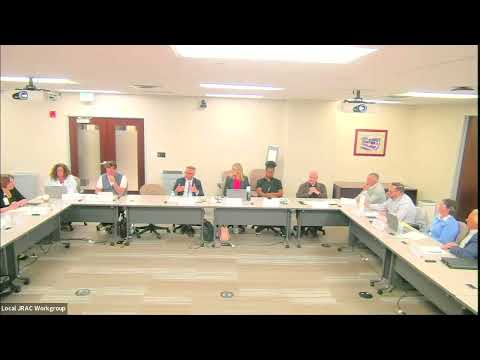
JRAC members warn funding cuts, SEA-1 risk local probation and treatment programs
Summary
At the Local JRAC Work Group meeting, members said grant reductions and uncertainty over opioid settlement governance threaten county programs; Justice Goff warned that Senate Enrolled Act 1 could reduce funds for probation and increase DOC placements unless state-level supports are adjusted.
State and local JRAC members told the work group that funding shifts pose an immediate risk to county probation and problem-solving court programs.
"David always reminds me it's about 70% of a county's budget that goes to funding the justice system. It's only about 1% of the state's budget that goes to funding the justice system," Associate Justice Chris Goff said while describing resource pressures facing counties.
Members reported that funding reductions are already forcing counties to cut evidence-based programming and, in at least one case cited during the meeting, to absorb formerly grant-funded positions into general funds or eliminate positions. The 2025 annual-report survey (about 41–42 responses reported) repeatedly flagged reductions in grant funding as the top concern.
Goff and other participants warned that Senate Enrolled Act 1 (the recent property-tax legislation discussed during the meeting) will compound the pressure by reducing the local revenue base counties use to support probation. "This Senate Enrolled Act 1 is going to hit our county-based systems really hard, particularly their ability to supervise effectively this middle population that can't go to the DOC," one participant said, paraphrasing the group's discussion.
The group noted several indicative data points offered during the meeting: one county reported a local recidivism rate of 22% for program participants versus a statewide 36.5% without those programs; several counties reported 76–100% of their jail populations are pretrial; and a Department of Corrections official was cited as saying DOC facilities are about 90% at capacity.
Attendees recommended several next steps: better messaging to the legislature and executive-branch partners about local needs, using communications and data tools to show comparative county performance, and exploring more stable funding models (including funding formulas or targeted allocations rather than short-term grants). Justice Goff asked staff to consider outreach to General Assembly members and executive agencies to explain the importance of continued funding and to return with options that make clear the likely local impacts.
The work group did not adopt any legislation at the meeting; members agreed to pursue communications, data transparency, and TA models as near-term responses and to continue the funding discussion with state partners before the next JRAC meeting on June 12, 2026.