Get Full Government Meeting Transcripts, Videos, & Alerts Forever!
Get email alerts on the Technical Assistance topic
No spam. Unsubscribe anytime.
Indiana JRAC weighs sustaining county technical assistance as grants wane
Summary
Associate Justice Chris Goff and local stakeholders told the Local JRAC Work Group that counties supported by technical assistance make the most progress, and members discussed shifting some TA to state court-services staff and regional peer-learning to maintain programs amid funding cuts.
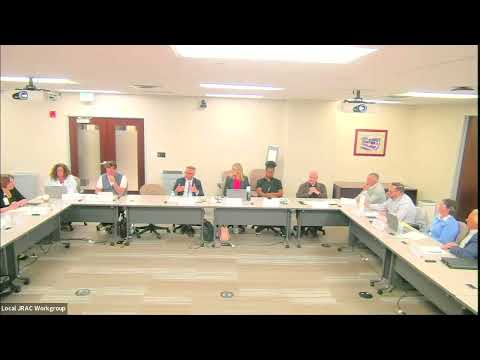
Associate Justice Chris Goff opened the Local JRAC Work Group meeting by pressing the group to preserve technical assistance that county teams say drives local progress. "We have about 42 responses for the 2025 annual report, and by and large the counties that have reported the most progress…are the counties being supported by technical assistance," Goff said.
Denise Symdon of CEPP reported that her organization is working directly with 14 counties and will begin outreach to another 15–20 sites after reviewing annual reports. "CEPP is working with 14 different counties," Symdon said, adding that one additional county was preparing to come on board.
The group discussed options to sustain that help beyond the current CEPP cycle. Chris (technical assistance lead for court services) and Justice Goff outlined a plan to leverage existing Indiana Office of Court Services (IOCS) staff and certification teams to provide a more continuous level of support—short of the full CEPP contract model but aimed at building local capacity and facilitation skills.
Judge Spitzer proposed using a Project ECHO–style virtual hub model to spread best practices without large travel budgets. "I use Project ECHO…it's a neat way—it's not very expensive—to deliver that because it's just a Zoom meeting," Spitzer said, describing monthly didactic sessions followed by case discussions that allow counties to exchange forms, funding sources and lessons learned.
Sheriff Jeffrey Balon described Porter County’s approach as an example of locally woven supports: regular in-jail treatment graduations, social workers, and a soft handoff to community caseworkers. He said community partners such as North Shore Services now help maintain counseling services after funding reductions.
The work group discussed a mix of regional summits, state navigators who could visit multiple counties, and virtual peer-learning to maintain momentum and limit turnover. For next steps, members asked staff to continue piloting lower-cost TA models, link counties with peer partners who have demonstrated success, and finalize details of any IOCS-led navigator roles.
The meeting closed with a request for volunteers to help design regional TA pilots and for CEPP and IOCS staff to return with cost and staffing proposals.