Get Full Government Meeting Transcripts, Videos, & Alerts Forever!
Get email alerts on the Legislation topic
No spam. Unsubscribe anytime.
YJOC flags implementation work for Senate Bill 171 and other juvenile justice bills
Summary
Committee members reported that Senate Bill 171 contains many implementation elements and will require close work; the group also discussed redaction in court records (SB246), child-sight rules (HB236), online intimidation language (SB140) and an expungement drafting effort.
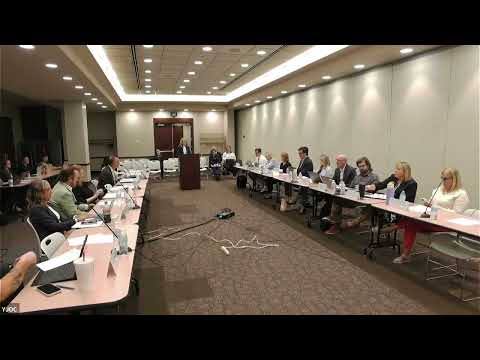
Members of the Youth Justice Oversight Committee reviewed several recent and pending legislative items and urged preparation for implementation work.
Mark, presenting the Commission on Improving the Status of Children update, said Senate Bill 171 is complex and will require significant discovery and implementation planning. He described roughly 40 separate elements in the bill and raised questions about how provisions—particularly those limiting placement changes in response to adoption petitions—will operate in practice. "A lot of complexity in that, which needs its own carve out," Mark said.
The committee also discussed Senate Bill 246, which focuses on redaction of court records to avoid child-identifying information; Mark said the bill seeks to move away from initials when those can be traced back to a child in a small community. House Bill 236 was raised for requiring direct sight of a child by the responsible worker before closing or dismissing certain cases, after concerns in a handful of cases where workers had not seen the child. Mark noted that an expungement bill introduced technical problems by borrowing adult-language terms (for example, using "arrest" where "charge" was intended) and that authors agreed to delay the measure to rework the language.
On online threats and intimidation, Mark described changes that narrowed an initially broader proposal and incorporated definitions of social-media platforms and "personal information" under an intimidation statute rather than creating a new standalone charge; the aim was to better target intent and avoid unintended consequences for youth. Committee members said some items may require subgroups or ad hoc technical teams to craft workable solutions ahead of the next legislative session.
No formal votes were taken; committee members agreed the next steps should include targeted implementation planning and possible ad hoc work groups to draft or review statutory tweaks before the next session.