Get Full Government Meeting Transcripts, Videos, & Alerts Forever!
Get email alerts on the Committee Priorities topic
No spam. Unsubscribe anytime.
Youth Justice Oversight Committee sets priorities, asks members to bring top three local needs to June meeting
Summary
The Youth Justice Oversight Committee reviewed work-group brainstorming—including diversion-directory expansion, parent engagement, detention capacity and youth substance-use concerns—and asked members to bring their top three local priorities to the June 11 meeting.
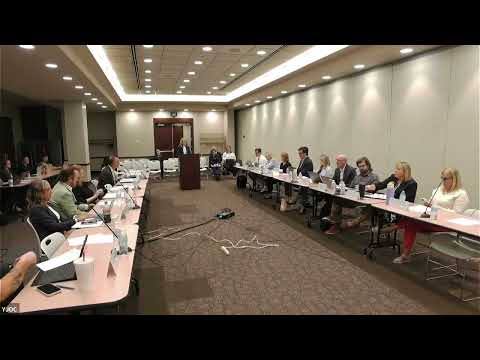
The Youth Justice Oversight Committee met to review work-group feedback and set priorities for the coming year, Chair D. Kenworthy said, asking each member to bring their discipline or community’s top three needs to the committee’s June 11 meeting.
Kenworthy opened the meeting with a brief round of introductions and then summarized ideas from co-chair meetings, including tracking traffic to the committee’s diversion directory and considering whether to expand it to list community alternatives to detention, behavioral-health programs and outcomes. "If it is helpful and useful to folks out there, would it make sense to expand that to include other types of programming," Kenworthy said.
The committee discussed forming ad hoc groups with defined tasks or a standing "hot topics" group that could take on changing priorities. Kenworthy asked members to avoid duplicating work already underway elsewhere and to focus YJOC effort on gaps. He also urged members to solicit colleagues' input at upcoming judicial conferences.
Members highlighted several priority areas. Kenworthy called out gun involvement among youth and encouraged local interventions, including safe-storage messaging: "When you put a gun in the hand of a young person, they are impulsive, terrible things happen," he said. The group identified parent engagement as another priority, noting parental-participation orders are common in child-welfare cases but rare in delinquency proceedings and suggested more tailored family participation plans to improve procedural fairness.
Committee members also raised operational concerns, including detention-bed availability and staff shortages at certain facilities, which may leave beds unusable even when facilities have physical capacity. Dr. Aalsma briefed the group on substance-use trends and mental-health risks among youth, urging education and early intervention.
Kenworthy closed by reiterating the homework assignment: members should come to the June meeting prepared to recommend the top three priorities their discipline or community should address through YJOC work groups or ad hoc teams.