Get Full Government Meeting Transcripts, Videos, & Alerts Forever!
Get email alerts on the Subdivision topic
No spam. Unsubscribe anytime.
Planning commission continues subdivision-ordinance review; debuts proposed timeline and bond clarifications
Summary
Commissioners reviewed pages 11–17 of the subdivision-control ordinance, proposing to extend several review timelines from 30 to 35 days, debating the $5,000 commercial permit cap, minor-plat thresholds, and performance-bond language after citing recent bond and road-completion problems.
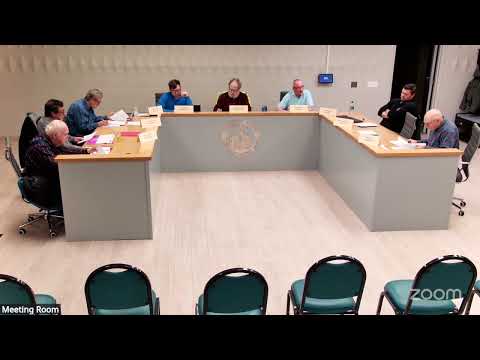
The Knox Planning Commission continued a line-by-line review of its subdivision control ordinance, focusing on timelines for plan approval, definitions and uses of performance bonds, and the threshold for minor versus major subdivisions.
Commissioners agreed to align secondary plan approval timelines with prior changes and proposed increasing the review period from 30 to 35 days to ensure enough time for review and a meeting slot. On construction plans, staff noted a forthcoming church elevator project with an estimated installation cost cited during the discussion. Members revisited the existing $5,000 cap on commercial permit fees (20 cents per square foot, capped at $5,000) and discussed whether the cap should be raised for very large commercial projects.
The commission debated the definition and application of performance bonds and security options. Members cited a recent local example (the Jack and Boore project, bid amount discussed at $191,000) and a partially completed subdivision (Sunny Brook) where lack of a sufficient bond left the city without funds to complete a roadway. Commissioners recommended keeping bond language flexible so the commission may set bond amounts case by case, with engineers' estimates used as guidance but not binding.
On thresholds, the draft currently set six lots as a minor subdivision in one clause, but commissioners recommended verifying state definitions and reverting to three lots as the minor subdivision threshold to avoid conflicts with state practice and density concerns. The commission also noted an editorial correction: replacing the placeholder name 'Napp' with the correct 'Knox.'
Why it matters: The ordinance establishes the city's authority to require bonds, set approval timelines, and classify minor versus major subdivisions—each affecting developer obligations, public infrastructure completion, and local residents' access to services. Next steps: commissioners will continue review and, where appropriate, forward recommended language to the city council and attorney for final drafting.
Provenance: Subdivision discussion is documented from SEG 611 through SEG 1218 (pages 11–17) and includes the typographical correction at SEG 1198–1203.