Get Full Government Meeting Transcripts, Videos, & Alerts Forever!
Get email alerts on the Animal Control topic
No spam. Unsubscribe anytime.
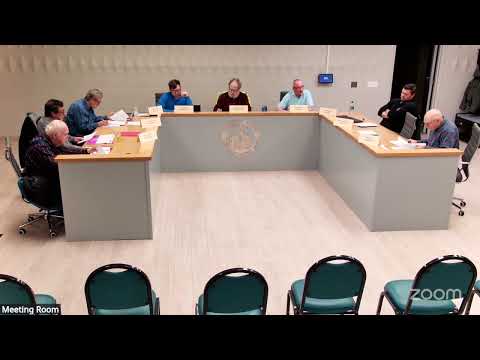
Planning commission sends two-mile animal-enforcement recommendation to city council
Summary
The commission voted to forward a recommendation asking city council to consider removing routine animal-enforcement authority for areas in the two-mile extraterritorial jurisdiction, citing heavy staff workload and overlapping county/state remedies.
The Knox Planning Commission voted to forward a recommendation to the city council asking it to consider relinquishing most city animal-enforcement authority in the two-mile extraterritorial jurisdiction outside the city limits. Commissioners said recurring complaints—ranging from multiple dogs in a residence to livestock such as hogs and horses—have strained the city staff assigned to enforcement.
Lonnie, a city staff member, described repeated enforcement calls and examples of complex cases, saying he had been "spending a lot of time" handling animals outside the city and that residents "think that they need to call Lonnie." The commission noted that state statutes and county code enforcement can apply in some cases; a county representative noted that, "for that to happen, you need ... a neighbor to complain," after which county code or state humane-animal statutes could be triggered.
Members discussed several options: keeping the rules on the books but narrowing enforcement to serious health-and-safety incidents; creating an intergovernmental agreement to delegate enforcement responsibility to the county; or formally recommending the city council amend the zoning ordinance to relieve city staff from routine animal-enforcement tasks beyond the city limits. One commissioner urged outreach to the county before council consideration so the transition would not be "a pissing contest." The commission approved a motion to send the matter to the city council for consideration and possible public hearings; the motion carried after members voted "I" with no recorded opposition.
Why it matters: The two-mile buffer covers territory many residents say cannot vote in city elections that affect rules applied to them, and enforcement responsibility affects taxpayer-funded staff time and intergovernmental coordination. Next steps: the city council will receive the commission's recommendation and decide whether to pursue ordinance amendments, an intergovernmental agreement with the county, or other options.
Provenance: This article is based on the commission discussion beginning at SEG 033 and continuing through SEG 386.