Get Full Government Meeting Transcripts, Videos, & Alerts Forever!
Get email alerts on the Zoning topic
No spam. Unsubscribe anytime.
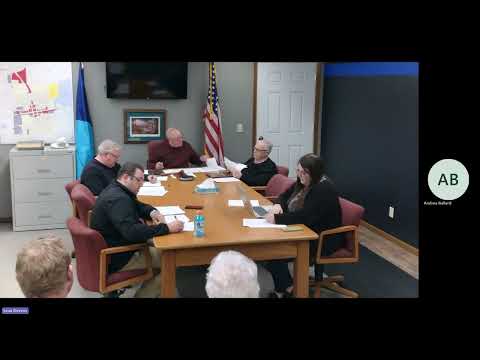
Sherburn council adopts two ordinances tightening conditional uses in industrial zones and adding permit process
Summary
The Sherburn City Council on March 2 adopted Ordinance 2026-01 to clarify conditional uses in the industrial district and Ordinance 2026-02 to add a conditional-use permit application process, imposing limits on outdoor display, hours, traffic and hazardous-material handling.
The Sherburn City Council on March 2 adopted two ordinances that revise how conditional uses operate in the city’s industrial district and establish a formal permit application process.
Andrea read the language of Ordinance 2026-01, which amends section 901.04, subdivision 6C to add a conditional-use category allowing the sale of goods within industrial areas under conditions. "The sale of goods shall be conducted entirely within an enclosed building unless otherwise approved by the council," Andrea said as she outlined limits on outdoor display, hours of operation, parking, signage, security and hazardous-material handling.
The council moved and seconded approval of Ordinance 2026-01 and adopted it by voice vote. Council members then considered Ordinance 2026-02, an amendment to section 901.03 that creates a conditional-use permit application process. That ordinance also passed following a motion and second.
Why it matters: the changes formalize when retail-like activity may occur inside industrial zones and give the council explicit authority to impose conditions intended to protect neighboring uses and public health and safety. The ordinances require compliance with applicable federal, state and local licenses and authorize the council to limit noise, traffic, glare and other impacts.
Council discussion during the public hearing focused on ensuring the proposed language preserves the intent of the industrial district while allowing compatible secondary retail operations. There were no recorded public objections during the hearing portion of the meeting.
The ordinances now read that any retail sale within an industrial operation must be secondary and incidental to an otherwise-permitted industrial or wholesale use unless the council finds compatibility with surrounding land uses; outdoor display or storage of merchandise is barred unless expressly approved in the conditional-use permit.
Next steps: the ordinances take effect per standard local code timelines unless the council specifies otherwise; the meeting record shows the council adopted both measures and did not refer either back for amendment.