Get Full Government Meeting Transcripts, Videos, & Alerts Forever!
Get email alerts on the Personnel Compensation topic
No spam. Unsubscribe anytime.
Elberfeld council passes Ordinance 2025-07 updating employee pay splits and reimbursement caps for 2026
Summary
The Town of Elberfeld approved Ordinance 2025-07 addressing pay and reimbursement rules for officers and employees for calendar year 2026, including adjusted pay-split percentages for water and sewer positions and language allowing capped reimbursements for certain staff costs.
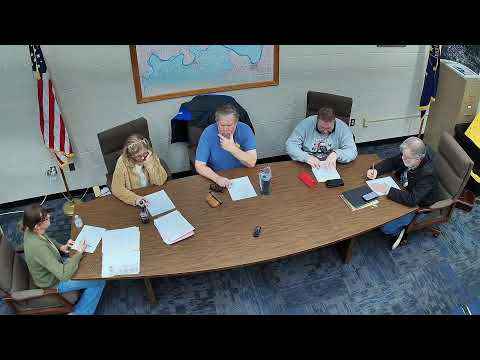
The Town of Elberfeld moved forward on personnel pay rules when a council member made a motion to pass Ordinance 2025-07, an ordinance regarding payment of officers and employees for calendar year 2026; the motion was seconded and the council indicated assent.
The ordinance, as discussed by staff and council, would set maximum reimbursement amounts for certain positions and revise how employer-paid percentages are split for utilities-related positions. A speaker said water pay would increase to 60 percent, a town position (identified in the transcript as Jason) would remain at 10 percent, and sewer would be 30 percent. The draft language discussed also allows the council to approve individual reimbursement amounts up to the stated maximums rather than fixing each employee’s exact pay in the ordinance.
Council members and staff (Dennis and Chris were named in the dialogue) said the change is intended to cover interim insurance premiums and other compensation adjustments between now and a new program the town aims to put in place in spring. The discussion included a note that specific individual amounts would be reported to council for approval.
A council member moved to pass Ordinance 2025-07; the motion was seconded and the meeting record shows the body responded in the affirmative when asked for a vote. The transcript does not record a roll-call tally or list which council members voted yes or no.
Next steps: the ordinance was moved and seconded during this meeting and, per the minutes read at the session, was advanced. The transcript does not specify an effective date or whether a second reading is required under local rules; those details are not specified in the record.