Get Full Government Meeting Transcripts, Videos, & Alerts Forever!
Get email alerts on the Wastewater topic
No spam. Unsubscribe anytime.
Flora council approves $1.25M wastewater pay application amid questions about sewer-liner tests
Summary
The Town of Flora approved Pay Application No. 13 for $1,250,557 for its wastewater plant project while engineers and council members debated lab test results for cured‑in‑place sewer liners and a contractor offer to extend warranty and provide factory testing.
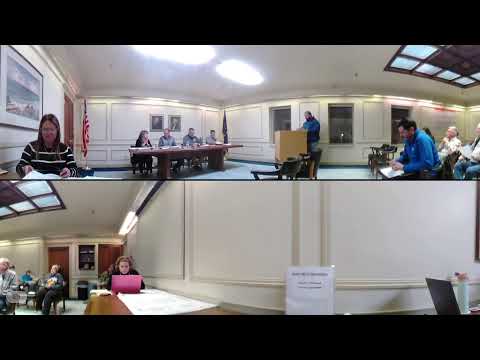
The Town of Flora council on Jan. 5 approved Pay Application No. 13 for $1,250,557 to the wastewater plant contractor but left several quality‑control questions unresolved after laboratory results showed mixed compliance for cured‑in‑place (CIP) sewer liners.
At the meeting Darren of Commonwealth, the town’s construction administrator, asked the council to approve the pay application, which he said represents roughly 73% of the contract value. The council moved, seconded and approved the payment by voice vote.
The meeting then turned to Division B, a sanitary‑sewer rehabilitation project. Engineers reported that laboratory testing of installed CIP liners produced passing results for larger diameters (10, 12 and 15 inches) but that several smaller sizes initially appeared to measure thinner than the specification. The contractor told staff it measured the product before lab submission and found it met specs; the apparent shortfall appeared in lab paperwork. The consultant said the discrepancy may be a clerical or lab error and that cutting into installed lines to sample them in the field would risk damaging new pipe.
To address the concern the contractor proposed two remedies for council approval: (1) factory testing of the same liner product pulled from inventory (rather than destructive field sampling) and (2) extending the liner warranty from one year to three years for material already installed. Engineers said factory testing would not be a perfect match for field conditions but would provide additional data; they also suggested representative CCTV inspections during the extended warranty period as an added safeguard.
Several council members pressed for the full lab paperwork and a clear chain of custody for the test results. One councilor said retainage would remain in place and noted the town could require camera inspections or other remedies as part of a warranty agreement. The project engineer said the contractor has not been given retainage release and that a letter from the independent lab clarifying results is being requested.
The council did not order immediate corrective construction to the installed liners. Instead, members asked staff to obtain the complete laboratory report, negotiate warranty language and consider a requirement for representative CCTV inspection during the warranty period, while holding retainage until the town is satisfied with the documentation.
Next steps: council members asked staff to gather the full lab correspondence and warranty language for review at the next progress meeting; the contractor will not receive final retainage until the town and its engineer are satisfied with documentation or agreed corrective measures.