Get Full Government Meeting Transcripts, Videos, & Alerts Forever!
Get email alerts on the Land Use topic
No spam. Unsubscribe anytime.
Riley County weighs rules for data centers and battery storage as moratorium nears end
Summary
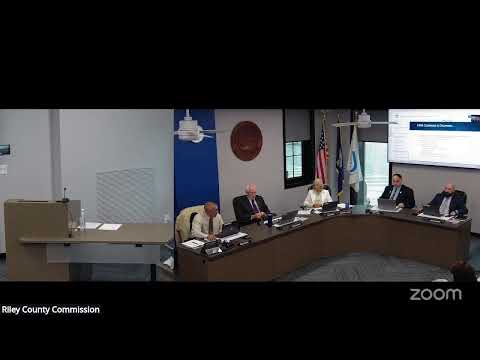
Planning director Amanda Webb told commissioners June 22 that Riley County’s moratorium on data center and battery storage proposals should be used to develop rules addressing water, power and safety; commissioners asked staff to gather sample regulations and training materials and signaled no tax abatements for such projects.
Amanda Webb, Riley County planning director, told commissioners on June 22 that the county currently has a moratorium on data centers and battery energy storage systems and recommended using the moratorium period to research regulatory options and technical impacts.
"Right now we have a moratorium on them," Webb said, explaining staff cannot accept applications while the moratorium is in effect and can instead collect information on zoning, water and power demands, public‑safety risks and potential tax policy. Commissioners discussed the tradeoffs: large hyperscale facilities can bring revenue but have significant power and water demands; smaller facilities and battery installations present different footprints and risks.
Commissioners signaled they will not offer tax abatements for data centers. Board members repeatedly asked staff to examine how different facility scales — from small regional centers to hyperscale sites — would affect county infrastructure, agriculture and service needs. Commissioners also emphasized the need to review other counties’ approaches and state legislative developments before adopting local standards.
Webb offered to return next month with sample regulations, comparisons of peer counties and training material she is acquiring on battery storage safety. The board did not direct immediate permitting changes; the moratorium remains the practical barrier to accepting new proposals while staff develops recommendations.
What’s next: Webb will bring sample zoning language and battery‑storage information at a future meeting; commissioners may extend the moratorium or adopt tailored criteria once they have more comparative data.