Get Full Government Meeting Transcripts, Videos, & Alerts Forever!
Get email alerts on the Public Safety Fee topic
No spam. Unsubscribe anytime.
Audit finds unbilled units; North Bend staff propose occupied—unit manual and notification plan
Summary
A city audit identified roughly 100 dwelling units not previously billed the public safety fee; staff proposed a manual defining "dwelling unit" (kitchen plus sanitary facilities), clarified hotels and assisted—living treatment, and recommended notice and an appeal path for accounts that change.
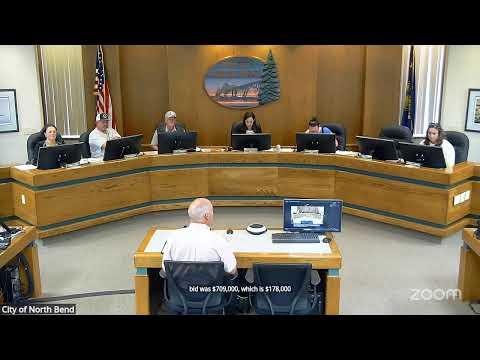
Ralph Dunham presented the public-safety fee equity audit and a companion occupied-unit evaluation manual to the council on June 22, saying he had reviewed building records, advertising and on-site conditions across the city and found about 100 units that had not been listed for billing. "I found about 100, believe it or not, units that aren't even listed," Dunham said, describing field checks and water-account reconciliation. Why it matters: The council is preparing to implement clearer, consistent billing for the public safety fee. Dunham proposed defining a dwelling unit as having both sanitary facilities and a means of cooking (excluding microwave-only motel rooms), and staff recommended notifying accounts with substantial changes and offering an appeal process. The presentation identified several recurring complications: hotels and motels are generally treated as a single commercial/business occupied unit unless rooms are separately leased long-term; assisted-living facilities without individual kitchens may count as a single account while ancillary apartment-style units on the same property could be billed separately; and some properties are on shared meters, requiring on-the-ground verification. The city attorney cautioned that the existing code language (chapter 13.30) is not crystal-clear about vacant properties and that implementation approach should reflect council policy direction. Staff recommended publishing the final manual online, issuing individualized letters to materially affected customers via the water-billing system, and making adjustments through an appeal process. Council signaled support for staff's plan to implement the manual and to notify impacted account holders; no immediate code amendment was adopted at the work session.