Get Full Government Meeting Transcripts, Videos, & Alerts Forever!
Get email alerts on the Doula Integration topic
No spam. Unsubscribe anytime.
Connecticut doula task force sets hospital survey deadline, flags credentialing and reimbursement as main barriers
Summary
A Connecticut doula subcommittee agreed on a three-week deadline for a hospital survey (responses due July 10, reminder July 6), and spent much of the meeting cataloging barriers to doula integration in hospitals—credentialing differences, low Medicaid (Husky) reimbursement and inconsistent workflows and referrals.
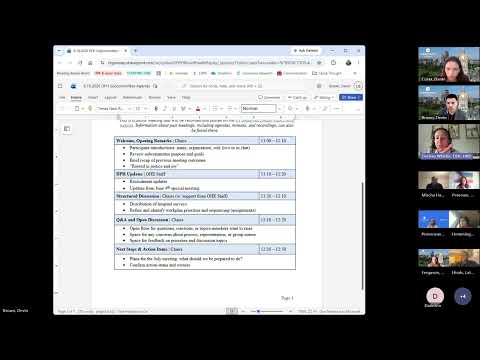
A Connecticut doula task-force subcommittee agreed to send a five-question survey to hospitals and set a target response date a week before its July 16 meeting, while spending most of the session cataloging barriers that may limit doulas’ access to hospital-based care.
Dr. Oay, who the group asked to distribute the survey, said, “I plan to send it out next week.” Members agreed on a three-week turnaround to encourage responses and asked Selena to send a one-time reminder on July 6 so staff have time to compile results before the July 16 meeting.
Why it matters: participants said the surveys and follow-up will inform a cross-checked master hospital list and produce a summary of policy documents and reported practices each hospital provides. That picture, they said, will help the task force identify which hospitals have formal doula policies and where community efforts should focus.
What the group decided and will deliver: the subcommittee agreed to (1) distribute the finalized five-question hospital survey; (2) aim to close responses roughly three weeks after distribution (target responses available a week before the July 16 meeting); and (3) share all collected results with the full subcommittee so volunteers can compile themes and possible best practices.
Barriers surfaced in discussion: participants identified three primary categories the survey should probe: credentialing, reimbursement and workflow. Several speakers stressed that state certification terminology matters: hospitals may require Connecticut Department of Public Health (DPH) certification, while community training programs also issue certifications that some hospitals accept. Rebecca Peterson, a behavioral health program manager who participated on the call, cautioned that ‘‘almost all folks are Husky’’ in some target populations, and that Medicaid coverage and the adequacy of reimbursement rates meaningfully affect whether doulas will participate in program billing.
Administrative burden and referral rules were raised repeatedly. Participants described recent guidance that appears to require a provider referral or letter for doula billing; speakers said some providers either do not know how to issue such a letter or refuse to do so, which can block reimbursement. The group also heard that hospitals often lack a usable directory of doulas by service area—making it hard for clinicians to refer reliably even when policy permits referrals.
Data gaps and next steps: Devon and several volunteers (named in the meeting) will cross-check a master list of Connecticut hospitals with labor-and-delivery services and compile survey returns. The Connecticut Health Association (CHA) and some hospital partners have been contacted about sharing process metrics, but Devon said those data may not be available within the study timeline. The subcommittee also discussed a national landscape scan of doula-friendly hospital policies (suggested starting places included Rhode Island and states with more integrated doula programs) and agreed volunteers would assemble best-practice models to share in July.
Voices from the meeting: Franchesca Provenzono introduced herself as branch chief at the Connecticut Department of Public Health’s Community Family Health and Prevention Branch and noted her agency role and recent arrival to the team. "I've been working for DPH for 27 years," she said, underscoring DPH participation in the effort. Rebecca Peterson, who identified herself as a behavioral health program manager with the office of the commissioner, emphasized access barriers for Medicaid-enrolled patients.
Process and outreach: the group discussed parallel outreach to doulas and patients to gather experiential data—one participant suggested an initial doula survey with a later part-B informed by hospital responses; others proposed in-hospital capture strategies (QR codes, brief staff surveys) and soliciting provider and nurse perspectives to understand implementation gaps.
What the task force will report: the subcommittee intends to present a cross-checked hospital list, the compiled survey results, and thematic findings about credentialing, reimbursement and workflow barriers at or after the July 16 meeting. If hospitals return policies late, the group said those documents could still be integrated into the final deliverable.
The meeting ended by consensus; the subcommittee’s next meeting is scheduled for July 16 and volunteers were asked to circulate draft materials and literature notes to Devon and the group ahead of that session.