Get Full Government Meeting Transcripts, Videos, & Alerts Forever!
Get email alerts on the Floodplain Resiliency topic
No spam. Unsubscribe anytime.
Dewey Beach council moves to tighten floodplain code to pursue higher CRS rating
Summary
To pursue a higher NFIP Community Rating System class, Dewey Beach approved code changes requiring elevation of electrical/HVAC/plumbing equipment to the lowest floor (removing an exception) and adopted cumulative tracking of building improvements (5-year window) to clarify 'substantial improvement'.
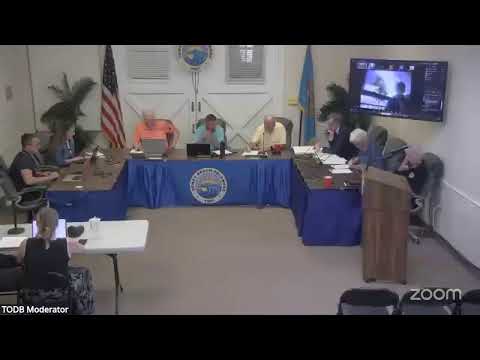
The Dewey Beach Town Council voted April 17 to amend multiple floodplain-related code sections as part of a strategy to improve the town’s FEMA Community Rating System (CRS) score.
Commissioner Persinger explained that paragraph D of section 101-27 requires electrical systems, HVAC and other service equipment to be located at or above the elevation of the lowest floor; the existing exception (paragraph E) allowed lower placement if components were designed to prevent water entry. Council members were told that removing the exception is a prerequisite to qualify for a higher CRS class—an upgrade that can lower residents’ flood-insurance premiums.
Council discussed practical consequences for property owners, including potential elevated meters and access considerations for maintenance, and noted a board of adjustment exception process would remain available in constrained situations. After discussion, commissioners voted to delete the exception and adopt the change to meet the CRS prerequisite.
Separately, the council addressed the ‘substantial improvement’ definition and chose a version that requires cumulative tracking of improvement costs over a five-year window (rather than a 10-year window). Commissioners and residents raised concerns about how market value is measured and how past improvements that have increased market value might affect future thresholds; staff said they will track permits and assessed values and apply current market/assessed values when evaluating thresholds going forward.
Council members said these changes aim to strengthen flood resiliency and qualifying documentation for CRS, while acknowledging some property owners may face practical or financial impacts when rebuilding or making significant improvements in flood-prone areas. The council approved the measures and tasked staff with developing tracking and guidance procedures.