Get Full Government Meeting Transcripts, Videos, & Alerts Forever!
Get email alerts on the Utility Rates topic
No spam. Unsubscribe anytime.
Bristol advances ordinance to delay water increase and scale back planned sewer hike
Summary
On July 15, 2025 the council advanced Ordinance 2025-08-07-14 to second reading: it would delay the scheduled water rate increase until May 1, 2026 and reduce the August 1 sewer increase by about 10% compared with the existing ordinance; the ordinance is drafted to be retroactive to July 1, 2025 and to credit any overpayments.
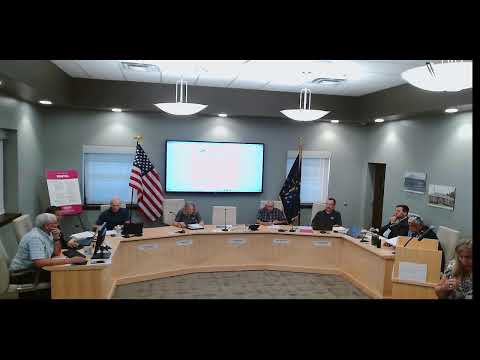
Legal counsel Alex Bowman introduced Ordinance 2025‑08‑07‑14 at the July 15, 2025 council work session, proposing amendments to the town code chapters on water and sewer rates to delay and modestly reduce planned increases. Bowman said the ordinance would delay the water rate increase until May 1, 2026 (current schedule: August 1 of this year) and would implement a sewer increase for August 1 that is roughly 10% lower than the rate currently scheduled in the ordinance; the phase‑three sewer increase would remain possible in May 2026 but at a slightly reduced level compared with prior estimates.
Consultants from Baker Tilly presented the financial analysis supporting the recommendation. They said the 2024 bond proceeds materially inflated 2024 actual receipts and that, after normalizing, a five‑year forecast indicates the utilities can meet debt‑service coverage and reserve requirements while postponing the second water phase and reducing the immediate sewer increase. The consultants provided bill‑impact examples: under their model a typical water‑and‑sewer combined bill would be about $96 after the August change and about $114 after the May 2026 phase, with a typical sewer bill rising from roughly $53.72 currently to about $59 under the reduced phase‑2 scenario (the prior ordinance projection had estimated a larger August increase).
Bowman also noted the ordinance is drafted to be retroactive to July 1, 2025 so that any rates that would have gone into effect August 1 can be overridden if the ordinance is adopted after the publication/hearing process; section 10 provides for a credit to ratepayers if they paid higher amounts in the interim. He said the ordinance follows the required notice and public‑hearing process for utility rates and will reach second reading after publication and the required hearing period.
A motion to advance the ordinance to second reading was made and seconded; the vote recorded aye from Renfro, Burke, Tolski and Doug Smith and the motion carried. Counsel and staff will publish the notice and prepare for the August hearing and second reading on August 7.
Next steps: publication of notice, required public hearing and second reading; staff and counsel to implement the crediting mechanism if interim overpayments occur.