Get Full Government Meeting Transcripts, Videos, & Alerts Forever!
Get email alerts on the Community Solar topic
No spam. Unsubscribe anytime.
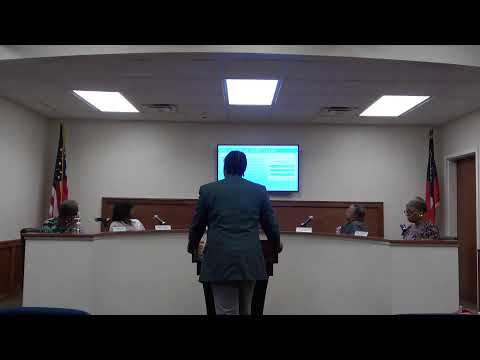
Nonprofits pitch rooftop solar leasing to Lithonia council to lower bills and boost resiliency
Summary
Georgia Conservation Voters and Capital Good Fund presented a rooftop solar leasing pilot to the Lithonia City Council, saying the program helps low‑ and moderate‑income homeowners afford solar, offers an 80% generation guarantee and can fund roof repairs, batteries and tree pruning to expand eligibility.
Georgia Conservation Voters and the Capital Good Fund on Oct. 21 urged the Lithonia City Council to help promote a rooftop solar leasing pilot they say can lower energy bills and improve neighborhood resiliency.
The presenters told the council the pilot, which began in September 2023, is designed for low‑ and moderate‑income homeowners who meet three criteria: own their home, have a roof in good condition and have household income under $150,000. "We were seeing anywhere between 10% savings and some of the people we seen even further than that," Timothy Shelton Jr., community engagement manager for Capital Good Fund, said of the pilot results.
Why it matters: Presenters said rising utility costs make solar an affordability tool for many households. Jesus Rubio of Georgia Conservation Voters described local canvassing to inform residents about Inflation Reduction Act incentives and urged the city to partner on outreach so residents can access grant funding.
What the presenters proposed: Shelton said the program uses a 25‑year lease to fix customers' energy costs and includes consumer protections. He said the pilot includes an "80% guarantee," meaning the program would refund customers if panels produce less than 80% of the estimated generation. He also described a buyout option after seven years and a Georgia Brigh 2.0 variant that, he said, would guarantee roughly 20% immediate savings for some participants.
Program supports and resiliency: The presenters described funds earmarked to address barriers to solar adoption, including roof repairs awarded by lottery, assistance for multifamily buildings, and limited tree‑pruning funds when vegetation blocks panels. Shelton cited a customer example in which a household's billed energy use fell sharply after installation; he also said battery storage allowed that household to maintain power for medical needs during outages.
Limits and sourcing: The figures and program guarantees described in the presentation were reported by the presenters and were not independently verified at the meeting. Shelton said Georgia Power supplies about 70% of the state and that the utility raised rates last year; those assertions were presented as context for the program's urgency.
Next steps: Presenters asked the council to help publicize the program and partner on outreach and enrollment; the council did not take formal action on the program during the work session.
(Reporting note: speakers and program names are used as stated by presenters at the meeting.)