Get Full Government Meeting Transcripts, Videos, & Alerts Forever!
Get email alerts on the Land Use topic
No spam. Unsubscribe anytime.
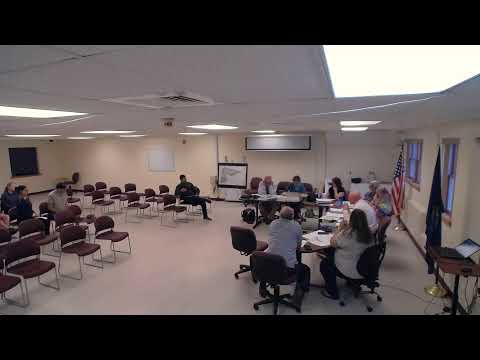
Sabattus Planning Board questions KP Realty plan over traffic, safety; motion to deem application complete withdrawn
Summary
The Sabattus Planning Board debated whether to declare KP Realtys site-plan application complete after members raised concerns about traffic counts, Green Streets condition and pedestrian safety. A motion to accept completeness was made and then rescinded pending further studies and contingencies.
Kevin Gruff, a planning board member, moved to declare KP Realtys site-plan application complete, but withdrew the motion after fellow members pressed for more information on traffic impacts and road safety.
The discussion centered on whether the submitted materials satisfy the boards requirement that traffic data and municipal-service impacts be adequate to evaluate the project. Rick Dunn, the applicants representative, said the materials included a conservative, worst-case traffic allocation prepared by the applicants engineer and that a full traffic study would be the next step if the board requests one. “Jamie took the projected traffic from the development and in each case he said a 100% of that development in this analysis is gonna go to each one of these roads,” Dunn said, describing the submission as intentionally conservative.
Board members questioned whether the underlying DOT counts used in the application are current and whether the data address safety for pedestrians. Kevin Gruff said he contacted DOT and reported counts for Green Street that vary by year; the transcript records historical DOT counts cited in discussion (examples given during the meeting included figures such as about 1,940 and 2,030 annual counts in earlier years, and a more recent DOT viewer value described by the applicant as the latest available). Several members said those figures do not answer whether the road can handle increased traffic without physical improvements.
Members repeatedly raised safety at the No Name Pond/Green Street intersection. One board member said the intersection angle and limited sight lines make the location hazardous and noted sidewalks are intermittent or missing near project entrances. “I dont like this project. Im honest about that. I think its too big for that area,” a member said, urging that the board seek ways to reduce risk — for example, by requiring sidewalks, limiting the initial scope, or bonding to cover road repairs.
The board reviewed relevant local rules in the towns traffic/parking ordinance, noting weight limits that restrict vehicles over 18,000 pounds on several local roads and confirming that Green Street is a state-aid road. Members and the applicant discussed options the board can use if the application is accepted as complete later: require a comprehensive traffic study, require improvements or a financial guarantee for road damage, or require phasing so the board can measure impacts after early build-out.
Planning board counsel and members also pointed to outstanding items from a prior motion: the board had asked the applicant for existing traffic counts and volumes on surrounding roads; capacity information and any improvements needed; and a municipal service impact analysis covering schools and net changes in assessed value. Board members said counts and volumes had been submitted but that the submission lacked clear conclusions about whether improvements are necessary or what specific mitigation should be required.
Because of those unanswered questions the member who moved to deem the application complete rescinded the motion on the floor; no formal determination on completeness was recorded in the transcript. The item remained on unfinished business, with members signaling they may ask for a current or more comprehensive traffic study, potential conditions (bonds, phasing, or required sidewalks), and further documentation about road improvements and municipal-service impacts before making a final completeness determination or scheduling a final public hearing.
Next procedural steps recorded in the discussion: the board may request a traffic study (paid for by the applicant per local ordinance language discussed), ask for municipal-service impact details (including school-busing impacts and build-out assessed valuation), and consider phasing or bonding conditions if future analysis shows impacts that require mitigation.