Get Full Government Meeting Transcripts, Videos, & Alerts Forever!
Get email alerts on the Zoning Map Amendments topic
No spam. Unsubscribe anytime.
Kermit commissioners map extensive rezoning proposals around Austin and Pine streets
Summary
The commission reviewed the zoning map for four quadrants starting at Austin and Pine, proposing multiple block‑level reclassifications (C2, R1, I1/I2) to align zoning with existing commercial, industrial, and residential uses; no rezoning votes were taken and staff will refine map recommendations.
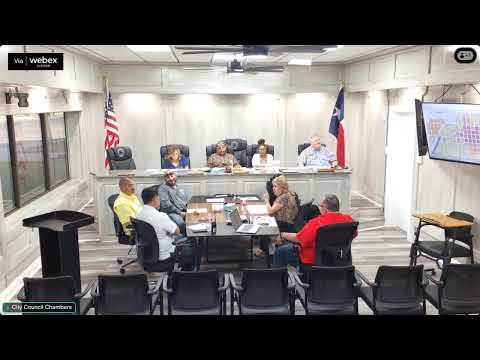
The Kermit Planning and Zoning Commission spent the bulk of its June 22 meeting reviewing proposed zoning‑map amendments across multiple quadrants centered on Austin and Pine streets and identifying parcels for reclassification to match on‑the‑ground uses.
Staff proposed dividing the study area into four quadrants and began a block‑by‑block review of the first quadrant, using a projected map display. Commissioners recommended several changes: converting an isolated commercial frontage and the adjacent storage/parking blocks to C2 regional commercial so frontage and rear storage areas share a consistent commercial designation; standardizing scattered manufactured‑housing/RV lots to R1 in some blocks to avoid future spot‑zoning when ownership changes; and reclassifying an industrial strip to I1 or I2 where heavy industrial uses predominate. Commissioners also flagged a small map anomaly at St. Angelo where city limits create a triangular parcel that may fall outside city jurisdiction.
"I think that entire block should be C2," one commissioner said while pointing to a block used largely for storage and business parking, urging the commission to align zoning with existing uses so properties are not left as islands of inconsistent designation. Another commissioner argued for making whole blocks R1 to protect long‑term residents from incremental commercial intrusions as parcels change hands.
The commission discussed procedural points: reclassifications would remain grandfathered for existing businesses until ownership change, and staff noted that an alley that stops inside a block creates boundary problems that justify selective parcel changes. No formal rezoning motions or roll‑call votes were recorded in the transcript; commissioners asked staff to prepare refined maps and return with recommendations and field verifications for subsequent meetings.