Get Full Government Meeting Transcripts, Videos, & Alerts Forever!
Get email alerts on the School Nutrition topic
No spam. Unsubscribe anytime.
School nutrition director outlines menu diversity gains, surging a la carte sales and projected fund shortfall
Summary
Barb Wara presented the Sun Prairie Area School District's "state of the plate" report, reporting higher student positivity for new menu items, large year-over-year growth in a la carte sales, rising unpaid meal debt, and a projected fiscal-year deficit that will draw on reserves and require local revenue adjustments.
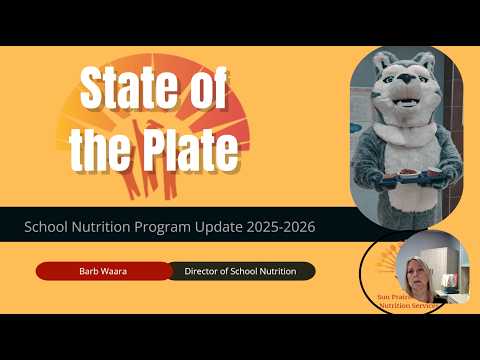
Barb Wara, director of school nutrition for the Sun Prairie Area School District, presented the department's "state of the plate" report to district leaders, citing growth in student engagement with new menu offerings, large increases in auxiliary sales, and a projected budget shortfall for the 2026-27 fiscal year.
Wara said the department's cultural-awareness initiative introduced eight globally inspired menu items and that student survey "positive responses increased from 64.3% to 68.5%," short of the 70% target but indicating an upward trend. She said taste-testing events for the new menu items were held at every school in the district.
The report credited a multi-pronged outreach strategy, including frequent posts on the department's Spaz Nutrition social accounts and a partnership with University of Wisconsin nutrition interns, who helped apply meals-per-labor-hour metrics, run recipe cost analyses and develop new menu items.
Wara reported auxiliary revenue gains: catering sales rose to more than $40,000 from about $38,000 the prior year, and a la carte sales "surged from $49,000 last year to $435,000 this year," driven largely by high school demand and expanded options. She said expanding a freshly made salad program for staff increased adult participation by approximately 7%.
While event-driven efforts such as National School Breakfast Week produced short-term lifts (an additional 177 students attended breakfast on the feature day), Wara said overall meal participation declined. She linked the drop to fewer families qualifying for SNAP benefits, which reduced the number of students eligible for free or reduced-price meals by roughly 1% (about 80 students).
The declining participation has revenue consequences: Wara said the district's negative meal balance rose to $74,263, an increase of more than 25% from the prior year, and that public records show unpaid school lunch debt rising across Wisconsin, including a reported 70% increase in neighboring Madison.
Wara explained that the School Nutrition Fund (Fund 50) operates as a self-sustaining enterprise fund and reported a fund balance of $1,611,000. Nevertheless, she projected a fiscal-year operating loss of about $250,000 and said the 2026-27 budget includes an intentional deficit of $1,156,845 to be addressed through a combination of the fund balance, modest local revenue gains from planned meal-price adjustments (a 10-cent annual increase), and increased general operating transfers.
Looking ahead, Wara said incoming Director of School Nutrition Barb Kempkin will assume the role on June 28, 2026; administrative assistant Dalia Bridges and nutrition manager Camila Brockman are working with the team. She urged focus on reversing participation declines, identifying cost-containment strategies, and preparing for forthcoming USDA regulatory updates that may change nutrition requirements.
The presentation concluded with Wara thanking staff and community donors for supporting meal programs. No formal board action or vote was reported during the presentation.