Get Full Government Meeting Transcripts, Videos, & Alerts Forever!
Get email alerts on the Medical Debt topic
No spam. Unsubscribe anytime.
House approves bipartisan medical-debt protections package limiting interest and certain collections
Summary
The Michigan House on June 23 passed a bipartisan package to curb medical-debt collection practices that includes House Bills 5254 and 5255. Sponsors said the bills stop predatory collections and cap interest; supporters emphasized they do not forgive debt. Both bills were ordered to take immediate effect.
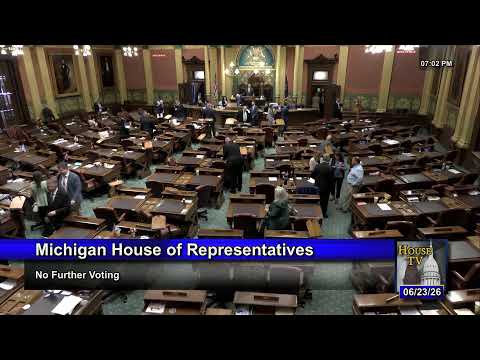
The Michigan House on June 23 approved a bipartisan package of bills aimed at limiting abusive medical-debt collection practices. House Bill 5254 (amending the Michigan Consumer Protection Act) and House Bill 5255 (limiting interest and charges on medical debt) passed on final passage and were ordered to take immediate effect.
Representative Riggus, speaking in support of the package, said the measures "do not forgive debt" but instead stop predatory collection practices such as home foreclosure, wage garnishment and excessive interest, and he urged colleagues to support relief that keeps medical crises from becoming permanent financial burdens. "These bills do not forgive debt. They only stop predatory collection practices including... and interest is kept at 3%," he said.
Floor proceedings recorded the adoption of one floor substitute and several amendments during second-reading consideration; a set of proposed amendments failed earlier on the floor before the sponsor’s substitute was adopted and advanced to third reading.
On final passage, House Bill 5254 was recorded as passing with 99 "I" votes and 7 "nay" votes; House Bill 5255 was recorded as passing with 95 "I" votes and 11 "nay" votes. The House ordered immediate effect for both bills.
Supporters framed the bills as targeted consumer protections that protect vulnerable Michiganders from aggressive collections and high interest rates following medical emergencies. The bills’ text, as discussed on the floor, stops certain collection actions, limits permissible interest on medical debt, and aims to keep medical crises from causing long-term financial ruin. Lawmakers said implementation details and department guidance will follow under the statutory framework.