Get Full Government Meeting Transcripts, Videos, & Alerts Forever!
Get email alerts on the Juvenile Justice Reform topic
No spam. Unsubscribe anytime.
Ottawa County juvenile court director backs bills to create statewide youth justice bureau and training institute
Summary
Tom Lindsey, juvenile court director, told the appropriations subcommittee that draft House Bills 7033 and 7034 would create a Youth and Family Justice Bureau and a Juvenile Justice Training Institute to improve oversight, data and training; he estimated an annual investment of about $10 million but said concepts could be cost-neutral by reallocating funds.
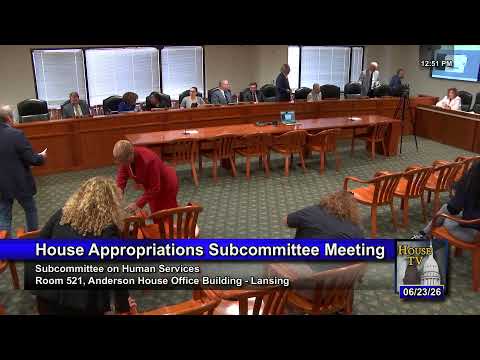
Tom Lindsey, juvenile court director in Ottawa County, told the House Appropriations Subcommittee on Human Services that the detention/residential and child-welfare legislative work group is proposing a package of reforms including House Bills 7033 and 7034 to establish statewide leadership and a standardized training institute for juvenile justice and child-welfare staff.
"We estimate the combined annual investment for this initiative would be approximately $10 million," Lindsey said, arguing the bureau would centralize oversight, technical assistance and data analysis while the training institute would standardize evidence-based practices and improve workforce development.
Lindsey described draft bill 6489 as a separate modernization that would clarify licensing distinctions between juvenile justice facilities and child-welfare facilities so regulatory requirements match safety and rehabilitative functions. He urged decentralizing centralized intake so local decisions can reflect community needs and emphasized prioritizing family-based placements to reduce costly residential placements.
Lindsey said juvenile justice placements in Michigan often exceed $600 per day while foster homes receive considerably less, and cited local court partnerships — including a program with Bethany Christian Services in Ottawa County — as examples of how higher per-diem rates and intensive case management can support placement stability and aftercare planning.
Committee members praised the local innovation model and discussed the balance between state oversight and county flexibility. No formal votes occurred; Lindsey said the work group will continue refining draft bills and implementation details with legislators and local stakeholders.