Get Full Government Meeting Transcripts, Videos, & Alerts Forever!
Get email alerts on the Wastewater topic
No spam. Unsubscribe anytime.
Oxnard wastewater manager recommends pilot to accept restaurant grease, citing biogas and modest revenue
Summary
The city’s wastewater division manager urged the Public Works and Transportation Committee to recommend City Council approve a one-year pilot revenue agreement with Pacific Byproducts (dba Coastal Byproducts) to deliver hauled fats, oils and grease to the Oxnard Water Resource Recovery Facility. Staff cited potential biogas gains and estimated annual revenue of $25,000–$50,000.
Jean Hauser, Oxnard’s wastewater division manager, told the Public Works and Transportation Committee she recommends the committee ask City Council to approve revenue agreement A-8616 with Pacific Byproducts, doing business as Coastal Byproducts, to deliver hauled fats, oils and grease (FOG) to the Oxnard Water Resource Recovery Facility as a one-year pilot program.
Hauser said the proposed initial term would run from July 22, 2026, to July 21, 2027, with options for two consecutive one-year extensions through July 21, 2029. "The recommendation is that the Public Works and Transportation Committee recommend the City Council approve and authorize the mayor to execute a revenue agreement," she said.
City staff presented the pilot as a way to provide a local disposal option for FOG haulers, increase biogas production in anaerobic digesters and offer a lower-cost disposal choice for local food-service establishments. "The plant could potentially accept up to 50,000 gallons per day," Hauser said, citing a 2023 study that recommended a pilot to verify assumptions.
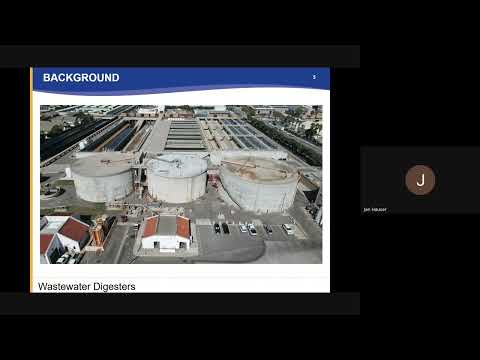
Hauser described an interim FOG receiving station installed at the plant — a screened connection for hauler trucks and pumps that send the material into digesters — and noted the facility will have three operating anaerobic digesters with the third coming online soon. She said Coastal Byproducts, which operates locally, had agreed in advance to the city's terms for participation in the pilot.
On finances, Hauser said the city would charge a per-gallon fee to participating haulers and that revenues from the pilot would be recorded in Wastewater Operating Fund 611. She estimated the pilot could generate approximately $25,000 to $50,000 annually depending on volumes received.
Hauser told the committee Ventura County has very few facilities that accept hauled FOG and identified the City of Thousand Oaks as the only other known local facility that does so, underscoring the pilot’s role in expanding local disposal capacity.
The committee was asked to forward the recommendation to the full City Council for consideration; no formal vote on the agreement was recorded in the committee presentation as provided in the transcript. If the council approves the agreement, staff would implement the pilot under the terms described by Hauser.