Get Full Government Meeting Transcripts, Videos, & Alerts Forever!
Get email alerts on the Zoning topic
No spam. Unsubscribe anytime.
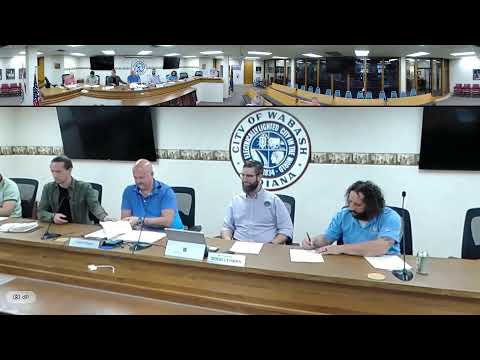
Wabash Board of Zoning Appeals approves petition to split lot at 1017 North Miami Street
Summary
The Wabash Board of Zoning Appeals voted unanimously May 21 to allow a petitioner to split the parcel at 1017 North Miami Street, creating an approximately 3,550-square-foot lot for an existing house that would not meet the city's 8,700-square-foot minimum; the applicant must next seek Planning Commission approval of subdivision/plat requirements.
The Wabash Board of Zoning Appeals on May 21 unanimously approved a petition to split the parcel at 1017 North Miami Street to allow the sale of an existing home that would sit on roughly 3,550 square feet, well under the city's 8,700-square-foot minimum for R-1 residential lots.
Don Adams, the petitioner, told the board he wants to split the house off from the rest of the parcel so he can sell it; the house is currently occupied by his daughter, Kelsey Boswick, and her two children. "We're not looking to build anything on there," Adams said, adding the split would create "another tax base right there." Board members questioned whether a market exists for such a small lot and confirmed that ingress and street parking would be on North Miami Street.
Mary, a city staff member, summarized the subdivision-control ordinance that governs lot splits. "We have a provision where we say that you can be excluded from that process if you can show that the things that would be accomplished by the preliminary and final plat are already in place," she said, noting the Planning Commission will examine access, utilities, drainage and related infrastructure when it considers a plat exemption.
Doug, who explained the board's voting procedure, told attendees the BZA uses a written ballot that requires findings such as whether the change will create undue traffic or negatively affect surrounding property values. "They have to make certain findings," he said. "They have to find yes and no, so they have a written ballot. They mark yes or no for each one." The chair announced the motion passed unanimously.
With the BZA's approval, Adams was directed to take the decision to the Wabash Planning Commission for the preliminary/final plat or any applicable exemptions. The meeting then adjourned.