Get Full Government Meeting Transcripts, Videos, & Alerts Forever!
Get email alerts on the Parks Tobacco Policy topic
No spam. Unsubscribe anytime.
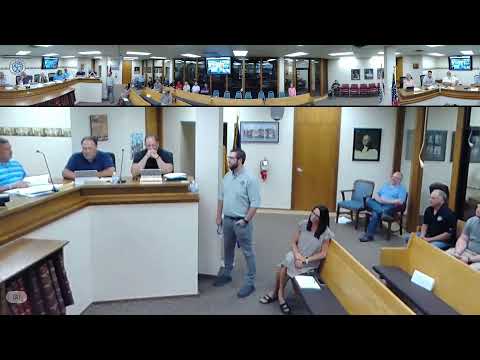
Wabash City Council rejects tobacco-free parks ordinance after hours of public testimony
Summary
After extensive public comment in favor and debate about enforcement and individual liberty, the Wabash City Council voted 4–3 on June 8, 2026 to defeat an ordinance that would have prohibited tobacco use in city parks.
The Wabash City Council on June 8 rejected, by a 4–3 roll-call vote, a proposed ordinance that would have prohibited the use of tobacco products — including e-cigarettes and smokeless tobacco — in city parks.
Supporters of the measure filled the public-comment period, arguing the change would protect children, reduce litter and prevent chemical runoff into Charlie Creek. Megan Henderson read a letter from Lean Ku, director of a local solid-waste management district, stating that "tobacco product litter makes up 25 to 45% of all litter globally" and warning that cigarette filters turn into persistent microplastics that leach toxic chemicals into soil and water.
Why it matters: Proponents said the ordinance would protect public health and set a community standard for children's recreation spaces. Opponents — including several councilmembers during debate — said the proposal was overly broad, raised enforcement concerns and risked penalizing users of smokeless tobacco such as youth athletes.
Council debate and concerns Several councilmembers expressed hesitation about expanding rules beyond the existing 50-foot restriction around playground equipment and questioned whether the city could enforce a broader ban. One councilmember warned the ordinance would make ordinary users and some city employees "violators" and said the council should be cautious about restricting personal liberties. The council discussed past failed attempts to impose similar limits and whether signage and education would be sufficient to gain compliance.
Voices from the public Suzanne Peoples, youth coordinator for the Wabash County Tobacco Free Coalition, urged passage and cited research about the harms of secondhand smoke and aerosol exposure, saying the exposure list contains "close to 7,000 chemicals" and that children are particularly vulnerable to respiratory harms.
Eric Seaman, a local parent, framed the measure as a public-health ordinance rather than a restriction on personal freedom, saying, "This is an ordinance regarding public health" and arguing that a single, comprehensive rule would be easier to enforce than a patchwork of 50-foot zones.
A resident advocating a compromise asked whether the council could ban smoking and vaping while allowing smokeless tobacco to avoid penalizing youth athletes who use chewing tobacco during games; that suggestion highlighted the tension between reducing visible tobacco use and avoiding unintended penalties for certain activities.
Vote and outcome On roll call the council recorded four "no" votes and three "yes" votes, and the ordinance failed. The recorded roll-call in the transcript was: Dylan—no; Bars—yes; Burns—no; Coin—no; Pilgrim—yes; Brewer—no; Sh—yes.
What’s next Councilmembers and speakers noted enforcement would rely in part on education, signage and voluntary compliance if the issue resurfaces. No immediate follow-up action or new deadline was announced at the meeting.