Get Full Government Meeting Transcripts, Videos, & Alerts Forever!
Get email alerts on the Sewer Rates topic
No spam. Unsubscribe anytime.
Wabash council advances sewer rate ordinance to fund $20.8 million project; councilors back $1.5M buy-down
Summary
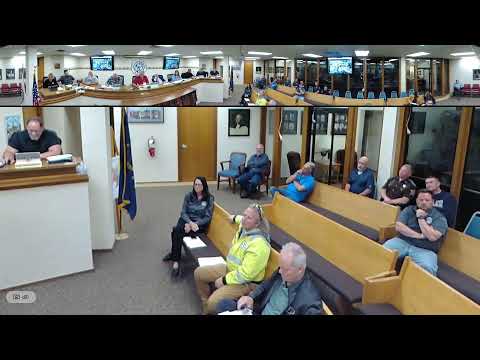
The Wabash City Council on April 27 advanced by first reading a sewer rate ordinance tied to a roughly $20.8 million construction program and $23 million total project cost. Engineers said the plan would require an aggregate rate increase of about 42.5%, phased over three steps; councilors signaled support for applying $1.5 million in cash to reduce bill impacts.
Tyler Haffner of Baker Tilly presented the utility rate study and financing plan to the Wabash City Council on April 27, saying the city faces roughly $20.8 million in construction and engineering costs and just over $23 million in total project costs once reserves are included.
Haffner said the proposal assumes issuing about $16.7 million in sewage works revenue bonds, receipt of a Ready 2.0 grant for just over $2 million and use of roughly $3.2 million in remaining 2021 bond proceeds. He told the council that, under the draft plan, "to collect that amount of revenues, you have to increase your rates by just over 42.5%, which is about $18 on a residential bill" (4,000-gallon bill). He described a three-phase implementation: a 20% increase effective Sept. 1, 2026; an 11% increase effective March 1, 2027; and a 7% increase effective Sept. 1, 2027.
Haffner walked council members through project funding options and sensitivities. He said bids for the construction work came in about $1.1 million lower than the study’s earlier estimates, which will reduce the final rates. He also showed the council that applying cash on hand would lower monthly bills: "every $500,000 of cash you apply, your rates go down by about 75 cents for a household," he said; applying $1 million would lower bills by roughly $1.50 per month.
Council members discussed balancing rate impacts and reserves. Several members raised concern for residents on fixed incomes and urged minimizing rate shock; others emphasized the long-term cost of delaying projects and noted the city’s utility fund was in a healthy position. Multiple council members signaled support for applying $1.5 million in cash to buy the project down, a move that staff said would still leave the utility above recommended reserve levels.
The ordinance would also adopt a system development charge (a capacity fee) for new connections. Haffner said the study presents three alternatives (full, 75%, and 50% charges) and noted that a full charge would mean a $745 system development charge for a standard 5/8-inch residential meter and scale up to larger meters (for example, a 4-inch service would be substantially higher).
Council approved first reading of General Ordinance No. 6, 2026 by roll call; the meeting record shows the motion carried with all members voting "Aye." The council directed staff to update the rate study using the lower bid numbers and to reflect a $1.5 million cash contribution before a public hearing scheduled for May 11, 2026. Bond sale and closing dates discussed in the presentation were June 11 and June 25, 2026 respectively; rates would not take effect until Sept. 1, 2026.
The presentation included a comparative rate chart that showed the 5,000-gallon user rate rising from $54.80 under current rates to an estimated $78.11 at the end of phase three, though Haffner noted that lower bids and any cash contribution would reduce those numbers. He also noted the utility’s operating disbursements and the need to maintain debt-service-coverage requirements tied to bond underwriting.