Get Full Government Meeting Transcripts, Videos, & Alerts Forever!
Get email alerts on the School Closures topic
No spam. Unsubscribe anytime.
Parents, students and former board member assail Pittsburgh Public Schools’ closure plan at June hearing
Summary
Dozens of parents, students and a former board member told the Pittsburgh Public Schools board that its recently approved facilities plan and school closures were rushed, inadequately engaged the community and risked displacing families — with calls for accountability and better transition supports.
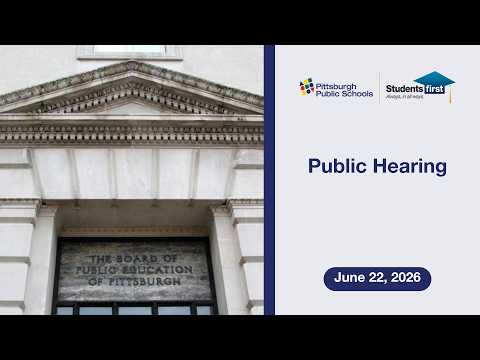
Pittsburgh — Parents, students and community members told the Pittsburgh Public Schools (Pittsburgh SD) board at a June 22 public hearing that the district’s newly approved facilities plan and school closures were rushed, inadequately engaged residents and risked deepening displacement and inequity.
"Voting yes on a plan that the vast majority of the public did not trust is not democratic," said Vanessa Dugavier, a community resident, who accused the administration of prioritizing image and administrative spending over classroom needs and named community groups that opposed the plan. She said the closures amounted to closing roughly 22% of the district and warned that many impacted schools sit in the path of development.
The hearing, moderated by Erica Gandy and opened by Board President Walker, drew parents, students and former officials who gave three-minute public comments under the board’s rules. Many speakers tied school closures to housing policy, displacement and long-term enrollment decline.
"You have a proposal in front of you about downtown. Is that conducive to children?" asked Randall Taylor, a former District 1 school board member (1997–2009). Taylor said population and housing changes — including the loss of large family public-housing developments — have contributed to enrollment declines and urged the board to press city agencies and the Urban Redevelopment Authority on child-focused housing policy.
Other speakers described concrete hardships. Nina Louise de la Vere, a fourth-grader at Woolslair, said classmates missed lunches on field trips because menus included pork, and urged the district to provide vegetarian and halal options. Dashiell Sawyer, a freshman, asked the district to allow ninth-grade entry or a smoother transfer into Westinghouse’s career and technical education (CTE) emergency response program to avoid disruptive, repeated school starts.
Several parents recounted emotional scenes and criticized board conduct. "It was heartbreaking to hear Jazlyn voice how many of us felt. It was absolutely appalling to see a board member laugh at her," Dugavier said. Jazlyn Worthy, a parent, said she had been dismissed and that the district even misspelled her name in a solicitor’s letter, underscoring concerns about professionalism and trust.
Speakers also raised financial and policy questions. Marsha Bandy (Squirrel Hill) questioned redirecting district real-estate tax dollars toward downtown Transit Revitalization Investment District (TRID) projects and cited a Smithfield Lofts development — 46 units, 39 described as affordable in testimony — to ask where family housing and neighborhood schools for downtown residents would be located.
Several commenters framed school closures as a loss of community anchors and urged policies to retain and attract families, including preserving family-size affordable housing and resisting displacement. "When a school closes, it reflects declining enrollment, but also the displacement and departure of families who once called these neighborhoods home," Luretta Payne told the board.
Board members did not debate or take formal action during the hearing; the event recorded public testimony following the May vote approving the facilities plan. Speakers repeatedly called for clearer accountability, better transition supports for students and families relocating into receiving schools, and more equitable meal options.
The hearing closed after the scheduled public comments. Board President Walker thanked attendees and adjourned for the evening.
What’s next: Speakers said the district has entered a planning period for transitions after the board vote and urged officials to prioritize supports during implementation.