Get Full Government Meeting Transcripts, Videos, & Alerts Forever!
Get email alerts on the Land Use topic
No spam. Unsubscribe anytime.
Resident urges moratorium on data centers; commission discusses zoning limits
Summary
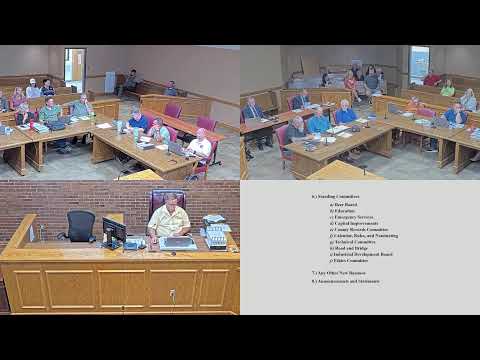
At the June 22 workshop a Kingston Springs resident urged Cheatham County to impose a moratorium and strict restrictions on data centers; county staff noted data centers were defined in January and limited to industrial zones, and commissioners withdrew a proposed prohibition resolution to allow staff to refine restrictions.
Ms. Linda Rider of Kingston Springs used the public forum to urge the Cheatham County Commission to halt approvals of data centers until strict protections are adopted.
"I thus I'm urging the commission to issue a formal legal moratorium until and unless adequate legal protections for the public are in place to safeguard the public and natural resources from the concerns of data centers," Rider told commissioners, saying the January zoning change that added a definition of data centers was a "good start" but not sufficient. She recommended limiting any allowed data centers to R‑3 zones, requiring independent enforcement funded by developers, and opposing nondisclosure agreements.
County staff explained the commission in January added a formal definition of data centers and designated them as "extensive impact facilities," restricting them to industrially zoned areas (E2, I2 and I3). Staff noted that while counties can impose lot‑size, buffering and noise rules, an outright ban would likely be legally vulnerable because "legal uses have to be allowed somewhere in the county." Commissioners discussed options such as minimum lot sizes, buffers, and exterior noise limits as means to reduce local impacts without an across‑the‑board prohibition.
After discussion, a commissioner asked that a proposed resolution to prohibit data centers be withdrawn from next week’s agenda so planning staff can draft specific, enforceable restrictions rather than pursuing an outright ban. No formal moratorium or prohibition was adopted during the workshop.
The commission directed staff to return with more detailed zoning and enforcement language for consideration at a future meeting, including how proposed restrictions would be enforced and funded.