Get Full Government Meeting Transcripts, Videos, & Alerts Forever!
Get email alerts on the Local Tax Policy topic
No spam. Unsubscribe anytime.
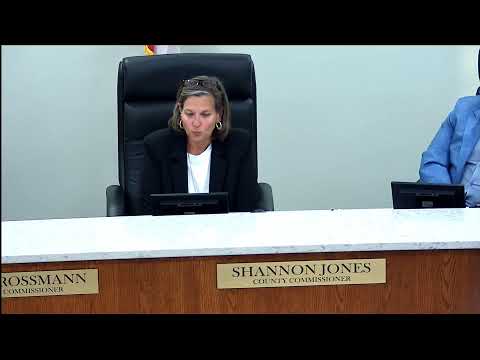
Warren County commissioners approve one-year 0.5% sales-tax increase, and remove county portion of property tax for a year
Summary
The Warren County Board of Commissioners voted to add a one-year 0.5 percentage-point permissive county sales-tax increase while setting the countyinside millage at zero for the calendar year that will be collected in 2027; commissioners framed the move as net property-tax relief for homeowners funded partly by nonresident visitors and tourism.
Warren County commissioners voted to place into the countytax budget a paired proposal that would eliminate the countyinside millage (about 2.7 mills) and add a 0.5 percentage-point county permissive sales-tax increase for one year. Commissioners said the swap would reduce the county portion of a typical homeownerbill (they used a $300,000 home as an example) by roughly $470 while the proposed local sales-tax increase would add about $50 for every $10,000 of taxable local purchases, producing a net reduction for many property owners.
Why it matters: Commissioners argued the change broadens the tax base to include many purchases made by visitors to the countya tourism and lodging huband so shifts some of the tax burden away from local property owners. Officials stressed the measure is temporary: the sales-tax increase would run for one year and sunset unless the board takes further action, and the property-tax change would be applied through the countytax-budget process.
What commissioners said: Commissioners repeatedly described Warren County as fiscally strong, citing zero general-fund debt and substantial reserves; they pointed to prior temporary sales-tax increases that funded capital projects such as the county jail without issuing debt. County officials and the board also emphasized constraints on local revenue from the state (the statesales tax is 5.75% and the local share is limited) and noted recent state actions such as capping valuation growth and a temporary homestead-exemption increase.
Public reaction: Dozens of residents addressed the board during an extended public-comment session. Ian Logan, a resident, opposed the sales-tax increase, calling it regressive and arguing renters and lower-income households would pay more while not necessarily seeing property-tax relief. Several other residents asked for more data on distributional impacts and sought the underlying study the county used to estimate what share of local sales-tax dollars are paid by nonresidents; staff and commissioners said the county relied on an analysis including work by the University of Cincinnati and offered to provide the study to residents.
Key figures and fiscal effect: County presenters used these headline numbers in the meeting: the countyportion of property tax on an average $300,000 house is about $470; a 0.5 percentage-point sales-tax increase yields about $50 per $10,000 of taxable local purchases; county staff estimated the swap would reduce overall tax collections by roughly $4to5 million (the county would collect less total revenue because the proposed sales-tax increase would not fully replace the reduced inside millage). Commissioners said the countywhile absorbing a modest shortfallhas reserves and would treat the change as an annual policy decision.
Timeline and implementation: Staff explained the legal and administrative timeline: a 30-day referendum window follows board action, the tax commissioner and vendors require advance notice, and any sales-tax change must take effect on the first day of a quarter (Commissioners discussed October 1 and January 1 start dates). County staff advised that to begin collections in October the board would need to act within the tight statutory notice periods; if delayed the earliest available effective date would be January 1.
The vote: After the public comment period and follow-up discussion, the board read a resolution that would (1) set the annual tax budget to reduce the countyinside millage to zero mills pursuant to Ohio law and (2) levy an additional 0.5% permissive sales tax (and matching use tax) for a one-year period. The motion was moved and seconded and carried in roll-call; commissioners acknowledged the political sensitivity of the decision and framed it as a one-year opportunity to test whether broadening the tax base can achieve property-tax relief.
What happens next: The county will publish the formal resolution in the tax budget and follow the notice and referendum timelines required by Ohio law. If the sales-tax change takes effect in October as discussed, vendors would begin remitting the additional tax late in the year and the county would see receipts begin in early 2027. Property-tax relief would be reflected in the 2027 property-tax bills as determined through the countytax-budget and auditor processes.
What the record shows: The boardduring this public hearingused county examples and an auditordriven analysis to explain the mechanics and estimated impacts; residents pressed the board for distributional studies and raised concerns about renters, seniors on fixed incomes, and methodological assumptions about how much of local sales tax is paid by nonresidents. County staff agreed to make underlying studies available to the public.
The meeting adjourned after the vote; commissioners and staff said they will monitor impacts and continue the budget process in line with statutory deadlines.