Get Full Government Meeting Transcripts, Videos, & Alerts Forever!
Get email alerts on the Parks And Trails topic
No spam. Unsubscribe anytime.
Commission approves EcoTarium plan to restore trails, improve access at Lower Pond
Summary
The Worcester Conservation Commission approved an order of conditions for improvements to the EcoTarium’s lower-pond trail network, including boardwalk repairs on helical piles, removal of some impervious pavement, and new nature-based education areas; staff required erosion controls and additional stormwater documentation.
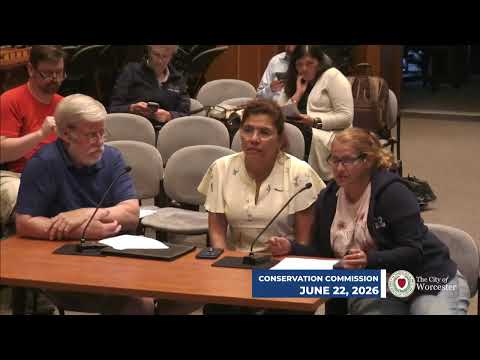
The Worcester Conservation Commission on June 22 approved an order of conditions for work to restore and improve trails and shore structures around the EcoTarium’s lower pond.
Matthew Ashley of Bowler Engineering described the project as repairs and realignment of existing paths, replacement of a wooden boardwalk on helical screw piles, removal of some asphalt, and the addition of nature-based education areas and accessible surface treatments. ‘‘This project removes impervious pavement, improves accessibility, and enhances environmental education and existing site conditions,’’ Ashley said.
Noreen Smith, president and CEO of the EcoTarium Museum of Science and Nature, told commissioners the project received funding from MassFish & Wildlife’s biodiversity initiatives and the state MassTrails program and that some design work responds to ADA-accessibility goals. ‘‘This is funding we received from the state Mass Trails program to help us redesign the trail to be accessible for all people who come to visit us,’’ Smith said.
Staff reported only minor outstanding comments and confirmed an EP file number had been issued; staff asked for a clearer depiction of the shoreline deck on plans and additional information to demonstrate compliance with state stormwater standards related to post-construction operation and maintenance. Commissioners asked about boardwalk decking material and how pavement would be removed; the project team said planking would be a wood product and that small equipment would likely be used to minimize disturbance.
Staff’s recommended order of conditions included standard sediment-control and erosion provisions, wetland flagging and demarcation of the work limit, and a notation that the commission was not confirming the jurisdictional boundary of a stream channel on the northern limit of work. The staff memo also cited a discretionary allowance issued under a local wetland regulation to permit certain work within a 15-foot buffer zone.
Commissioners closed the hearing and voted to issue the order of conditions. The permit requires seasonal components be stored upland, prohibits fuel or chemical storage within 100 feet of the lake, and requires the project to meet the erosion-control and stormwater conditions outlined in the approved plan. The commission did not require additional impervious-surface mitigation beyond the measures described in the application.
Next steps: the project team may proceed under the order and must follow the erosion‑control and inspection conditions spelled out in the permit. The commission recorded the vote and closed the item.