Get Full Government Meeting Transcripts, Videos, & Alerts Forever!
Get email alerts on the Finance Debt topic
No spam. Unsubscribe anytime.
Big Bear Fire Authority OKs up-to-$3M TRAN, requires board sign-off for draws over $2M
Summary
The Big Bear Fire Authority authorized a tax-and-revenue anticipation note of up to $3,000,000 to cover cash-flow gaps next fiscal year while adding a caveat that any draws above $2,000,000 must return to the board for approval. Finance staff said she expects to use about $2,000,000 and will repay the loan in January.
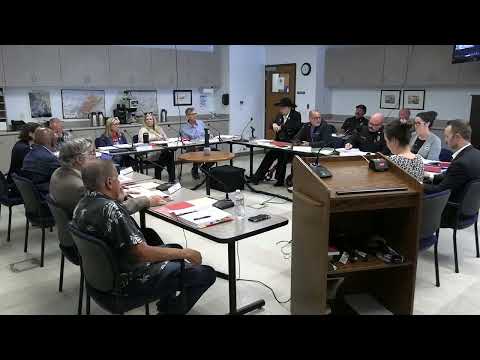
The Big Bear Fire Authority on June 9 authorized a tax-and-revenue anticipation note (TRAN) of up to $3,000,000 to cover payroll and cash-flow needs until property-tax receipts arrive, with a board-imposed condition that any draws beyond $2,000,000 require board approval. The board voted to approve the measure after extended questioning about last year’s use of the full TRAN during a major fire response.
Kristen, the authority’s finance officer, told the board the plan was a precaution: “I only anticipate the need for $2,000,000 but similar to last year, I'm requesting the additional 1,000,000, to be available in the case of unforeseen circumstances such as the fire,” and said the loan would likely be repaid in January. She estimated the current interest environment would produce an interest cost in the mid-single digits and said staff would only draw what was needed to avoid unnecessary interest expense.
Several board members pressed for stricter controls after recalling the full $3,000,000 was drawn last year. One director said, “You said the same thing last year that in case there was a big fire… but indeed, you did use all $3,000,000 last year,” arguing that the authority should not automatically carry the entire contingency without oversight. Another member suggested a policy requiring staff to present for a special meeting before accessing amounts beyond a set threshold.
To address those concerns, the successful motion included a condition that any borrowing above $2,000,000 come back to the board for approval. Finance staff and several board members said that practice had been used previously and that staff prefers to borrow in small increments to avoid unnecessary interest. The roll-call vote approved the authorization with the caveat.
The board’s action does not immediately change operations; it creates an available borrowing facility for the 2026–27 fiscal year. Staff said the TRAN would be used only as needed and that prior draws and repayments in recent years informed the cautious approach. The board also discussed cash-flow timing and the mechanics of convening special meetings if a draw were required before a regularly scheduled meeting.