Get Full Government Meeting Transcripts, Videos, & Alerts Forever!
Get email alerts on the Data Center Feasibility topic
No spam. Unsubscribe anytime.
Students and consultant say 5–7 MW data center feasible in Lennox; urge workforce and ordinance safeguards
Summary
A student-led feasibility study and a consultant told the Lennox City Council a 5–7 megawatt collocated data center could be built in town using reclaimed water for cooling; presenters recommended development agreements, zoning buffers and new local workforce training to capture economic benefits.
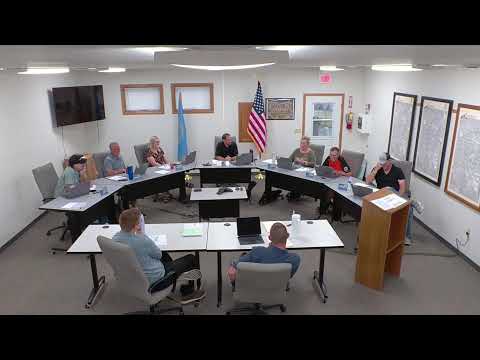
A feasibility study conducted with Lennox High School students and presented by a consultant found that a small collocated data center — roughly 5 to 7 megawatts — could be built in Lennox with minimal infrastructure change, potentially using reclaimed wastewater in a closed-loop cooling system.
The study, presented by Scott and students from the Digital Age Club, concluded that two candidate sites — city-owned land by the wastewater treatment plant and a site in the industrial park — align with utility access and fiber routes. The students reported utility capacity sufficient for a 5–7 MW facility, said the city has roughly 440,000 gallons reserved for water needs and that a closed-loop system would use an estimated 4,500–6,400 gallons per day, a fraction of the reservation.
The findings matter to the city because presenters tied the project to local economic benefits and workforce development. Scott estimated that a collocated facility could generate landing sales tax and, over time, property tax revenue, while student presenters urged creation of a local CT (cabinet containment/rack-power) training program to supply technicians locally.
The student team said community acceptance depends on transparent operators and local rules: "As long as the company that comes into town is trustworthy and has transparency, and as long as you guys are transparent with our community, then the community seems to be positive toward it," student Gavin Swear said. Eli, the environmental lead, recommended a closed-loop free-cooling approach and said it would use "under 1% of Lennox's water reservation." Scott summarized technical feasibility: "A 5 to 7 megawatt facility could exist in Lennox here ... with no changes to the infrastructure and using no palletable water whatsoever."
Presenters noted differences between collocated facilities and hyperscalers: collocation serves local enterprise disaster recovery and content delivery needs; AI training and hyperscale operations typically require much larger facilities (25 MW and up). They also cautioned the council that state-wide valuation methods for data centers vary and that existing tax codes may not capture the true landed value of equipment.
Council members asked technical questions about cooling, noise, fire safety and reuse of waste heat; presenters suggested setbacks, screening, continuous sound monitoring and development agreements requiring public reporting on water and power usage, noise and generator hours. Max Wilder, who led ownership/economic analysis, recommended developers fund project-specific upgrades so ratepayers would not bear utility upgrade costs.
There was no formal action on the item. Scott said he would help draft an ordinance if the council wants to move forward; students said they will continue outreach and planning for a proposed local training program. The council thanked the students for the presentation and noted the information will inform future ordinance or project decisions.