Get Full Government Meeting Transcripts, Videos, & Alerts Forever!
Get email alerts on the Library Usage topic
No spam. Unsubscribe anytime.
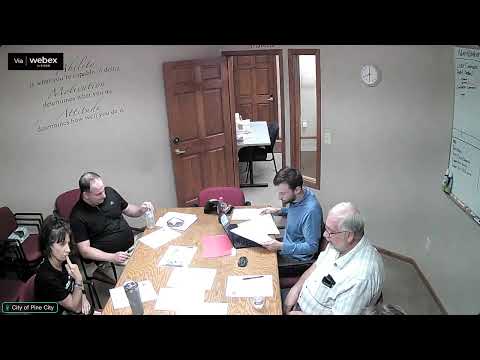
Pine City councilors question library usage numbers and space as budget pressures loom
Summary
Council members reviewed conflicting counts — the library’s 26,195 annual visits versus about 11,000 in a county dataset — and discussed whether the current building, hours and services remain justified amid expected cuts; no decision was made and members asked committees to review the data.
Pine City councilors spent much of their new‑business discussion reviewing library usage data, grappling with a large discrepancy between the library’s internal count and a county data set and debating whether the town’s library space and schedule remain appropriate as budget pressures mount.
Council members opened item 4.1 with a report from a member who said the library’s own records show 26,195 visits in the year and listed program and facility metrics such as roughly 2,260 public Wi‑Fi sessions, about 1,400 program attendees, 188 meeting‑room uses and 284 public computer sessions. The same presenter said a county dataset (referred to in the transcript as Placer) returned a lower figure — about 11,000 visits for the most recent 12 months — and that methodological differences (cell‑phone pings and Wi‑Fi detection) may account for the gap.
The councilor who presented the figures urged caution before drawing conclusions from either tally. "They're saying that there were 26,195 visits in the year," the councilor said, while also noting the county tool showed roughly 11,000, and that "Placer also tracks differently than the library" (committee member).
Several members emphasized the library’s non‑quantifiable services as part of the discussion. One councilor recounted a personal example of a resident who used library resources to learn to read and later find work, saying libraries provide "beautiful free access" for residents with barriers. That testimony was used to underline the library’s role beyond raw visit counts.
Speakers also raised operational questions tied to possible budget cuts: whether six‑day service is sustainable under staffing constraints, whether the facility’s size and current location remain the best fit for community needs, and whether any donor restrictions tied to prior contributions might limit future repurposing of the building. The transcript includes repeated references to a local donor family and a past remodel; councilors asked staff to verify whether any gift or endowment terms would constrain options.
A range of relocation or consolidation ideas was floated — from moving city‑hall functions into the library space to reusing other municipal buildings — but councilors did not take action to pursue relocation. Members asked committees and staff to review the usage numbers and potential facility constraints before bringing any formal recommendation back to the council.
The council did not vote on library location or hours. The discussion concluded with a direction to gather more information and to consider the library’s data, funding outlook and donor restrictions in committee work.