Get Full Government Meeting Transcripts, Videos, & Alerts Forever!
Get email alerts on the Project Skyway topic
No spam. Unsubscribe anytime.
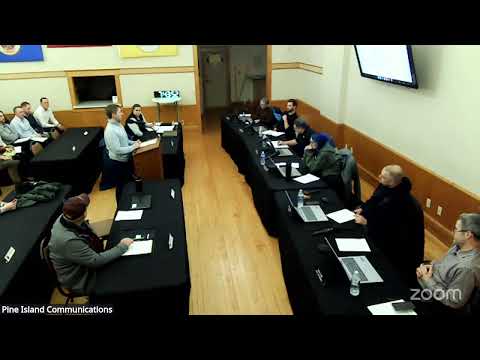
Pine Island council approves annexation, rezoning and development deal for Project Skyway after heated public comment
Summary
After extensive public comment on noise, air quality and classification, the Pine Island City Council approved annexation, rezoning to I2 with a PUD overlay, a final plat and a development agreement to enable phase one of Project Skyway; staff tied approvals to 11 conditions and MPCA standards for noise and air permitting.
PINE ISLAND, Minn. — The Pine Island City Council voted Jan. 20 to approve a package of actions that clear the way for phase one of Project Skyway, a large data‑center development proposed by Ryan Companies. Council action included a 440‑acre annexation request, rezoning of newly annexed land to I2 (light industrial) with a Planned Unit Development overlay, a final plat and a development agreement covering off‑site infrastructure obligations.
Supporters, including trades workers and longtime local business owners, told the council the project will bring construction employment and long‑term benefits: "Project Skyway represents meaningful investment in our local workforce," said Jason, a Pine Island electrician and lifelong resident. Former council member Jonathan Paul highlighted promises from the developer that include commitments to city and school partnerships, saying, "They are committing $24 million paid directly to the school over 20 years." Aiden Opats, a community economics educator with the University of Minnesota, presented an economic impact analysis estimating construction costs at about $700 million over two years and projecting as many as about 100 permanent onsite jobs in the near term, with larger construction‑period employment depending on mechanical, electrical and plumbing (MEP) budget share.
Residents and other commenters urged caution and asked the council to pause action until additional protections are in place. Health‑care provider Darcy Simpson said the project application and CUP lack sufficient safeguards and argued the only reason to press ahead without more conditions "is money." Several speakers raised concerns about low‑frequency noise from backup generators, emissions, generator siting, water use and the classification of hyperscale data centers as "light industrial." One commenter asked why the town would approve the project before outstanding lawsuit or environmental concerns were resolved.
Staff framed approvals as contingent on a set of conditions and oversight from state agencies. City staff and the city engineer said the proposal has been reviewed by multiple state and regional agencies — including the Minnesota Pollution Control Agency (MPCA), Minnesota Department of Transportation, Department of Natural Resources and the State Historic Preservation Office — and that many technical requirements must be met through permits and construction plans. The council packet estimated a phase‑one taxable market value near $45 million (for the one building plus office and site), which staff said could generate an estimated $737,385 in annual city property taxes under current assumptions; staff emphasized those numbers are preliminary and subject to county assessment.
Key approvals and safeguards
- Annexation (Resolution 26‑03): Council approved annexing roughly 440 acres into city limits under an existing orderly annexation agreement with Pine Island Township. The township reimbursement amount is $495 per acre, adjusted annually, producing a stated township reimbursement of $226,975.32 for this action; staff said the developer will reimburse the city, which will forward the payment to the township.
- Final plat (Resolution 26‑06): The council approved the final plat with 11 remaining conditions that include a plat opinion from the city attorney confirming all parties with interests in the assembled parcels consent to the plat; finalized stormwater and drainage plans with pond maintenance agreements; and incorporation of any required revisions by MDOT, the county surveyor and county recorder.
- PUD and conditional use permit (Resolution 26‑07): The council approved the PUD and conditional use permit while removing an earlier exemption for generator testing and maintenance; testing and maintenance must comply with noise standards during normal business hours. Staff emphasized that under Minnesota law the city cannot impose noise or air quality limits more stringent than MPCA standards, and that any air permits would be handled by MPCA.
- Development agreement: Council approved a development agreement spelling out public improvements and off‑site infrastructure (staff estimated roughly $16 million in infrastructure costs for the phase‑one work), required financial securities, developer responsibility for city review fees, and that the developer pay water/sewer/stormwater access fees (noted at $2,500 per acre in the packet) for developable acreage. Staff said the city's financial adviser reviewed developer finances and determined the developer has the capacity to complete improvements.
What remains and next steps
Staff and county/MDOT reviews remain required before final construction permits. The final plat conditions include required easements and drainage agreements; staff said the city will not accept maintenance obligations that it cannot feasibly perform and that maintenance agreements and easements will specify city access and obligations. Any future building permits will be required to meet the current MPCA standards in effect at the time of permit application.
Council members who voted in favor participated in the roll call after motions and seconds were made; no abstentions or failures were recorded on the record during the meeting discussion. Several council members and staff noted statutory timelines that require the city to act on certain applications within 60 days or risk automatic approval by statute if the city fails to act.
The council also approved smaller, routine items on the agenda including acceptance of a $79,148.88 donation from the Pine Island Fire Relief Association for the fire department (Resolution 26‑04), and a procedural election resolution requiring write‑in candidates to notify the chief election officer 19 days prior to an election (Resolution 26‑05). The meeting closed after brief library, public works, EDA mural and sheriff's office updates.
The developer and city will now proceed with the permitting, easement, stormwater and construction‑plan steps required by the conditions; those steps and state permitting remain the practical gates before on‑site construction can begin.