Get Full Government Meeting Transcripts, Videos, & Alerts Forever!
Get email alerts on the Start Times topic
No spam. Unsubscribe anytime.
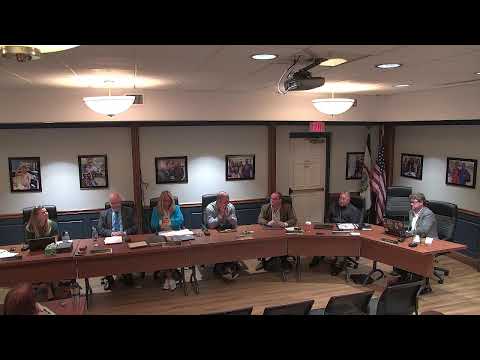
Ohio County board debates later high‑school start times; central office to refine phased options
Summary
Board members discussed a multi‑year effort to shift Wheeling Park High School to a later start, weighed bus and family impacts and agreed to let central office and the start‑time committee return with smaller, incremental options and costed proposals.
The Ohio County Board of Education on June 22 revisited a years‑long effort to push Wheeling Park High School’s start time later, agreeing to let the superintendent and the start‑time committee develop smaller, phased options rather than implement an immediate districtwide schedule change.
Dr. Miller, the district superintendent, told the board that committee work and outside routing consultants produced several alternatives but that each option carried operational and family impacts. “These are hard hard things we’re trying to do,” Dr. Miller said, adding that changes could create hardships for families around childcare and transportation.
Committee lead and board member Molly Aderhold said the panel constrained itself to low‑cost options that required minimal new capital. The committee’s work included route mapping with vendors and a vendor that specializes in start‑time scheduling, she said, and members heard consensus that the high school “starts too early” while many favored moving elementary schedules earlier if a change is made.
Board members emphasized tradeoffs. Andy, who served on the committee, warned that changing the high school start time “affects the other side of the algebraic equation,” asking what would happen to elementary and middle schedules. Ann urged broader input from parents, teachers and students and suggested structural alternatives such as placing freshmen back in junior high.
Several members noted limited bus capacity and the cost of adding routes and drivers. One board member said the district would need “more buses and more bus drivers” to compress routes and still provide a healthy start time for high‑school students. Dr. Miller and board members said a few additional buses are expected before the school year, which could affect feasibility.
Rather than pursue a single, sweeping change, the board agreed to let central office continue analyzing committee options and return with proposals that could be implemented in smaller increments and with clear cost estimates. The board emphasized preserving student welfare, minimizing family disruption and ensuring any transition is supported operationally.
Next steps: Dr. Miller will continue to refine options based on existing routing data, vendor analysis and available bus capacity and will present practicable proposals to the board for future votes. No formal policy change was enacted at the June 22 meeting.