Get Full Government Meeting Transcripts, Videos, & Alerts Forever!
Get email alerts on the Opioid Restitution topic
No spam. Unsubscribe anytime.
Hagerstown council moves to secure $436,000 in opioid restitution with brief MOU while full plan is drafted
Summary
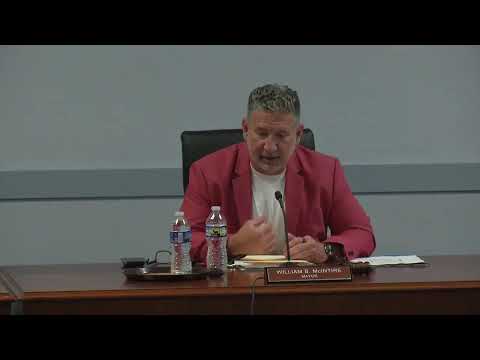
Facing a June 30 state deadline, Hagerstown staff recommended a short memorandum of intent naming a community partner to receive $436,000 in opioid restitution funds; council members favored partnering with the Washington County Health Department and asked for a detailed MOU to follow in July.
Hagerstown staff told the Mayor and City Council on June 23 that the city has about $436,000 in state opioid restitution (TAG) funds allocated for 2022—6 and must submit a program-specific five-year plan to the state by June 30, 2026, or forfeit the dollars to Washington County.
Michelle Hepburn, a city staff member presenting the options, said the council must choose between submitting a detailed city-run five-year plan now, letting the deadline pass and allowing the county to receive the funds, or signing a short intent document naming a community partner who would receive the funds and develop the full five-year plan on the city's behalf. "We would still have to have at the minimum the mayor's signature and whomever the community partner would be, their signature," Hepburn said, describing the short document as a way to buy time to complete a full memorandum of understanding.
Planning staff and the city's grant coordinator, Karen Reese, emphasized the eligibility and reporting requirements attached to the opioid restitution money. Reese and other staff described the record-keeping and compliance obligations as rigorous. "The eligibility and criteria that is attached is as stringent if not more than federal grants," staff said, noting oversight coming from the litigation-established board that administers these funds.
Council members asked whether the money could be split among more than one partner and whether the short MOU would bind future annual allocations. Staff said the brief intent document would need a named partner who is willing to sign quickly and that the MOU could be limited to the 2022—6 pool so it would not automatically commit future years. One council member recommended option three, saying the Washington County Health Department already has program plans and would be able to move quickly; other members said they would support partnering with the health department as long as the program remains city-focused.
Council did not take a formal recorded roll-call vote on an ordinance; the body indicated informal agreement to authorize the mayor to sign a short intent with a named partner and requested that a fully drafted MOU, outlining responsibilities and any time limits, be returned for council approval at a July meeting. Staff said the partner could receive funds directly from the state or act through the city as intermediary, but in all cases strict opioid-only use, itemized reporting, and program-specific metrics would be required.
Next steps: staff will pursue a short signed intent (mayor + partner) to preserve the 2022—6 allotment and schedule a detailed MOU and accompanying five-year plan for council review in July.