Get Full Government Meeting Transcripts, Videos, & Alerts Forever!
Get email alerts on the Tax Policy topic
No spam. Unsubscribe anytime.
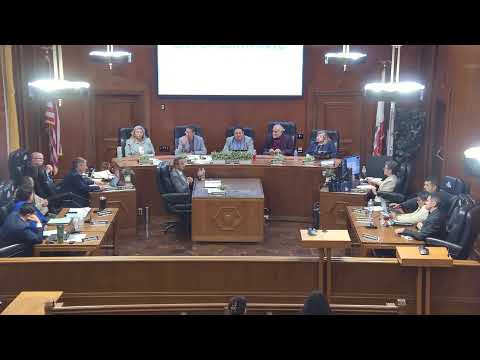
After heated debate, Southgate council places an 8% utility users tax on Nov. ballot and debates a conditional one-year water discount
Summary
Following hours of public comment, the Southgate City Council voted to place an 8% Utility Users Tax on the November ballot and debated (but did not adopt) a conditional one-time water-bill discount that staff proposed would take effect only if the tax passes.
After extended public testimony and council discussion on June 23, the Southgate City Council voted to submit a revised Utility Users Tax measure to the Nov. 3 municipal ballot at an 8% rate.
The rate decision was the culmination of weeks of analysis and public debate. Staff presented forecast scenarios showing that higher rates (8% or 9%) produce larger, more durable revenue streams to address an estimated structural deficit and stabilize basic services. City Treasurer, administrative staff and multiple council members argued that 7% — the original rate discussed earlier — would likely be insufficient to cover upcoming obligations, including a scheduled pension obligation payoff and rising insurance costs.
Separately, Vice Mayor Rios proposed a conditional one-time water bill discount intended to soften the impact of a new utility tax on residents. Staff outlined a model where the credit would be applied only if voters approved the UUT; the cost would be borne by delaying non-critical water capital projects rather than repurposing reserves. Staff estimated the cost to city customers at roughly $2.6 million for a 10% credit, with larger estimates for 15% and 20% credits. Under Proposition 218 staff cautioned that relief for residents served by non-city water providers would require a general fund appropriation and a separate mechanism.
Public reaction to the conditional discount was sharply divided. Several speakers — including public commenters with technical concerns — said delaying critical projects such as PFAS treatment and pipeline replacement to fund a temporary discount would harm long-term water safety and increase costs later. Others supported the UUT and saw a temporary relief program as a useful, limited cushion during an affordability crunch.
Council debate focused on balancing short-term relief with long-run infrastructure needs. In the end the council approved placing an 8% UUT on the ballot (roll-call majority) and did not adopt a discount resolution that night; staff recommended additional detail and safeguards if the council later decides to pursue a conditional program.