Get Full Government Meeting Transcripts, Videos, & Alerts Forever!
Get email alerts on the Property Taxes topic
No spam. Unsubscribe anytime.
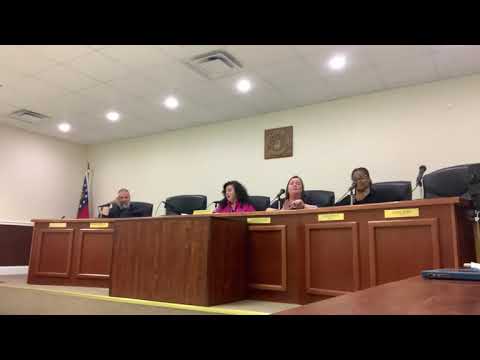
Resident presses council for clarity as Baldwin City opens millage-rate public hearing
Summary
At a public hearing on the millage rate, resident Stacy Nadore questioned why Banks County homeowners appear to face much higher percentage increases than other parts of the city; city staff explained a single mill rate combined with county-level offsets (LOSS) changes the effective percentage residents see.
Stacy Nadore, who identified herself as a resident of the Apple Pie Ridge subdivision, urged the Baldwin City Council to explain apparent disparities in property-tax percentage increases between portions of the city in different counties.
"I live in Banks County and I believe that the city of Baldwin gets...the city of Baltimore. I also believe that the city of Baldwin is looking to increase the millage rate for Banks County residents...It looks like Banks County residents are going to see possibly...53.15%," Nadore said, summarizing figures she had seen and asking whether tax revenue from Banks County returns to those communities.
City staff responded that the city sets one mill rate for all Baldwin residents but county-level offsets known as LOSS (state/local school offsets described during the meeting) and differences in taxable value can make the apparent percentage change vary between county sides. "The reason for the difference...is that there's one set mill rate that is set for the entire city of Baldwin. But the [Banks County] side sees a decreased mill rate due to the LOSS funds that are received annually," Woodmaster said, explaining that a recent $20,000 decrease in LOSS revenue contributed to the apparent disparity.
Council members and staff framed the millage discussion in budget terms: property taxes fund roughly 25% of the general fund, and rising costs for personnel, utilities and public safety were cited as reasons staff proposed the current millage level. Council members emphasized department-head input during budget planning and noted that some members campaigned against raising the rate while nonetheless participating in the discussion.
The council opened and closed the statutory public hearing on the millage rate after hearing comments and questions from residents; no formal vote on a final millage rate was recorded during this meeting.
Next steps: staff will continue budget work and the council will consider formal millage adoption in a subsequent public meeting, consistent with statutory notice requirements.