Get Full Government Meeting Transcripts, Videos, & Alerts Forever!
Get email alerts on the Development Infrastructure topic
No spam. Unsubscribe anytime.
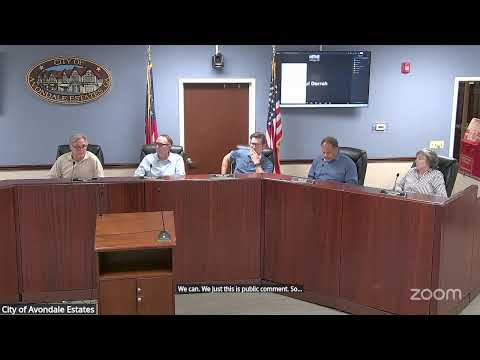
Avondale Estates approves IGA to fund Washington Street extension for Avila Edgewood development
Summary
The board approved an intergovernmental agreement to transfer budgeted city funds to the DDA to support public infrastructure tied to the Avila Edgewood downtown development; the vote was 4–1 after commissioners debated oversight and protections for the city’s funds.
Avondale Estates’ Board of Mayor and Commissioners on April 22 approved an intergovernmental agreement (IGA) to transfer city funds to the Downtown Development Authority (DDA) so the DDA can enter a contract with the developer of the Avila Edgewood project to build required public infrastructure.
The measure passed after debate about financial protections for the city’s $2.2 million share of required public infrastructure. The motion to approve the IGA was made by Commissioner Graham and seconded by Commissioner Louie; the roll-call tally was recorded as four in favor and one opposed.
City staff described the development as a roughly $350 million private project that will require about $21 million in public infrastructure improvements tied to zoning and stormwater requirements. Staff said the developer will underwrite roughly two-thirds of the $21 million and that the package of public support under discussion includes $5 million of pledged TED funding from the DDA plus transfers from the city and DDA to reach the total assistance requested by the developer. Under the terms presented, the city would transfer $1.42 million of previously budgeted capital funds to the DDA; that amount combines with $780,000 of DDA-controlled revenue and the $5 million TED pledge to finance the infrastructure contract with the developer.
City staff emphasized that the DDA must enter the construction contract with the developer because the city is limited by state public-works procurement caps and would otherwise have to competitively bid projects above the statutory threshold. Staff said contracting through the DDA, which can work with the developer’s construction team already mobilized on site, will reduce duplication of mobilization and could lower overall costs.
Not all commissioners were comfortable with transferring funds before the city has additional written protections. One commissioner asked that the record show the vote against the transfer did not mean opposition to the project itself but reflected concerns about oversight and assurance the city could recover funds if the project were not completed as agreed. Other board members and staff said the draft IGA contains checks and balances and expressed confidence in the DDA’s oversight and the legal review completed by the city and DDA attorneys.
The IGA approval authorizes the transfer of the specified budgeted funds to the DDA so the authority can commit to the developer contract and proceed with construction oversight, inspections and distribution of payments as specified in the agreement. The DDA had already approved the IGA on its end; execution requires the city’s approval to permit funds to flow under the IGA terms.
Next steps: staff said the DDA will move forward with contractual execution and that disbursements will be tied to inspections and milestones outlined in the DDA–developer contract. The board will receive further documentation and project updates as work advances.