Get Full Government Meeting Transcripts, Videos, & Alerts Forever!
Get email alerts on the Land Use topic
No spam. Unsubscribe anytime.
Norristown board denies variance for 705 Chain Street after debate over prior use and abandonment
Summary
After hearing testimony on whether 705 Chain Street had ever lawfully operated as a four-unit building, the Norristown Zoning Hearing Board denied the applicant’s request to change the property’s permitted use, finding the evidence insufficient to overcome questions about prior approvals and abandonment.
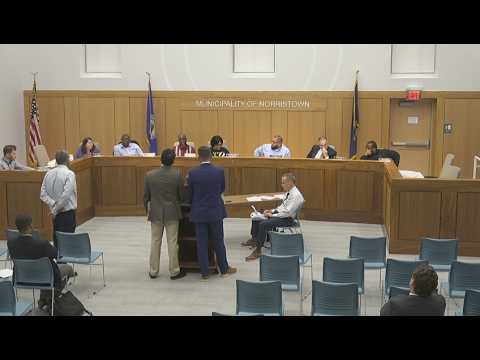
The Norristown Zoning Hearing Board on Thursday denied an applicant’s request to permit the multi-unit residential configuration at 705 Chain Street, after a two-hour evidentiary hearing about whether the property had been lawfully used as a quadruplex in the past.
Applicant counsel Charles Campbell asked the board to allow relief for multi-unit occupancy and submitted three contractor estimates showing the cost to: restore the building as a four-unit property ($51,200), convert it to a triplex (~$72,500), or convert the main building to a single-family home (~$122,000). Contractor Julius Demetrius testified he had worked on the property “about 15, 20 years ago” and said, “There’s always been four meters,” and described mechanical and fire-safety work needed to restore multiple units.
The municipality’s witness, Keith Gordon, manager of Norristown’s building-code department, told the board that municipal records included a 2018 zoning denial for a four-unit transfer and a 2020 zoning determination approving a use-and-occupancy permit for a single-family dwelling. Gordon stated that “the zoning approval for that property was for single family,” and that his office’s records show no valid rental license since 2019 and multiple outstanding code violations. Municipal counsel argued those facts supported a finding that any prior multi‑unit nonconforming use had been abandoned.
Applicant counsel disputed that conclusion and argued the property owner had paid taxes consistent with a multi-unit use and that absence of certain municipal files should not be treated as abandonment. The board heard extended testimony and viewed exhibits including county assessment listings, prior UNO/transfer paperwork, and photographs. No members of the public testified.
Following deliberations the board voted to deny the requested relief for changing the property’s permitted use. The board’s decision leaves in place the municipality’s prior determinations and the current municipal zoning designation for the site. The applicant may seek further procedural remedies provided by the zoning hearing process.