Get Full Government Meeting Transcripts, Videos, & Alerts Forever!
Get email alerts on the Education Referendum topic
No spam. Unsubscribe anytime.
Consultants: Survey shows workable support for a $4 million building bond; board urged to prioritize one question
Summary
Donovan Group consultants reported results of a 278‑response survey showing majority support for a $4 million building bond and mixed support for other asks; presenters warned combining questions risks splitting votes and urged targeted public education before an August ballot‑question deadline.
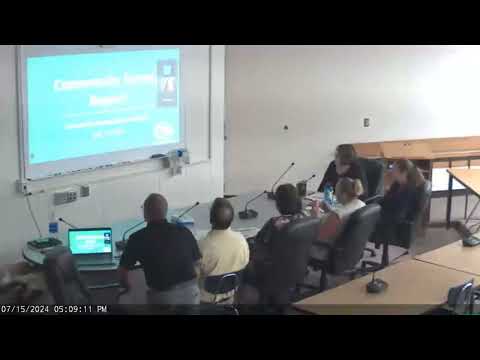
Dr. Lori Miller, a partner at the Donovan Group, and Tracy, the firm’s survey strategist, presented results of a community survey to the Lake of the Woods School District Board, saying 278 residents completed the questionnaire and outlining options for a potential November ballot.
"Our goal here is to share with you what your community thinks so that we can support your decision‑making process," Dr. Miller said as she opened the presentation. Tracy said the survey captured a convenience sample and that the team used weighting to better represent district residents not currently parents, employees or students; they identified a weighted comparison group of 81 respondents (about 29% of the total).
Key findings presented included a 64% overall yes response to a proposed $400,000 capital projects levy, majority support for a $4 million building bond referendum on the November ballot and lower but still positive support for a $5 million bond that added an athletic complex. Presenters emphasized that some measures—most notably an operating referendum framed as $497 per pupil—showed support in the full sample (about 62%) but fell below majority support in the weighted comparison group.
"We had a total of 278 respondents complete the survey," Tracy said, and cautioned that the poll used a convenience sample rather than a probability sample. She and Dr. Miller said qualitative responses showed three recurring concerns among respondents who opposed measures: tax burden, confidence in district fiscal management and requests for clearer, itemized explanations of how funds would be spent.
Board members pressed for detail. Board member Tim Lion asked whether a baseline of 10–20% 'definitely not' respondents is typical; Tracy answered that that range is expected and that engagement should focus on persuadable middle voters. Board member Boy Johnson asked for frequency counts of specific open‑ended concerns; Tracy said she can provide tallies and the full comment set for follow‑up analysis.
Presenters warned the board that packaging multiple referendum questions risks splitting votes. "If you include both of those, I think you want to work as a board to land on the question," Dr. Miller said, advising caution about putting multiple heavy asks on the same ballot. Several board members said they favored prioritizing a single question—many voiced support for leading with the $4 million building bond and following later with other measures if necessary.
The consultants also discussed illustrative tax impacts for public messaging: presenters and participants cited an example figure presented during the meeting that a $4 million bond would increase taxes on a $185,000 residence by about $41 per year (roughly $3 per month), and that combining additional measures would raise that monthly figure further. Presenters asked the board to treat those as estimates to be refined for voter materials and recommended clear, itemized examples for communications.
On timing, Dr. Miller and Tracy urged the board to act quickly. The consultants noted a near‑term administrative deadline for placing questions on the ballot and suggested the board consider a special meeting in early August to finalize language if needed; they said they would prepare a concise one‑page survey summary and an engagement roadmap to support outreach.
The board did not take any formal votes during the presentation. Presenters said they will provide additional analysis on comment frequencies and can help produce public‑facing materials; the board scheduled follow‑up discussion and expected to be in a position to consider a resolution soon.
Ending: The Donovan Group will supply requested breakdowns of qualitative responses, a one‑page summary for public distribution, and a recommended communications plan; the board is expected to revisit question wording and timing at an upcoming meeting to meet local ballot submission deadlines.