Get Full Government Meeting Transcripts, Videos, & Alerts Forever!
Get email alerts on the Air Quality topic
No spam. Unsubscribe anytime.
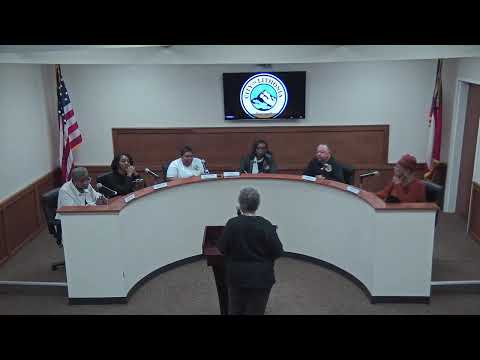
Councilwoman Howard seeks Emory air monitor to track local pollution in Lithonia
Summary
Councilwoman Howard asked the Lithonia City Council to host an air monitor supplied by Emory University to collect local air-quality data, and council members requested technical details, cost clarification and a presentation from Emory before deciding whether to place the device on city property.
Councilwoman Howard asked the Lithonia City Council to consider hosting a solar-powered air monitor provided by Emory University to gather local readings of pollutants and help the city identify whether residents are being exposed to harmful emissions.
Howard said the device is pole-mounted and transmits data to Emory, where students and faculty would review readings and could advise the city if measurements indicate elevated pollution. "If we can track what we are breathing we can seek alternative solutions to improve the health of our residents," she said.
Why it matters: The council framed the proposal as an evidence-gathering step rather than a regulatory action. Council members pressed for details the first time the item appeared in new business — including whether the monitor emits anything, who would pay installation or maintenance costs, and how Emory would identify specific pollution sources from point measurements. Howard said the monitor is a preliminary tool; if it shows concerning levels the EPA could deploy larger instruments to pinpoint sources.
During a question-and-answer exchange council members asked Emory to send a faculty presenter, not just students, and requested a technical briefing explaining detection limits, data ownership, reporting cadence and whether the city would incur costs. One council member said, "I want to see the actual box," emphasizing a desire for hands-on information before approving placement on city property.
No vote was taken. Council members agreed to ask Emory to present (in person or by Zoom) and to provide written technical specifications and a statement on costs and data-handling before the council votes on where and whether to host the device.
The council moved next to an executive session and returned with no action on the matter; further steps on the monitor will depend on Emory's follow-up presentation and the technical information the council requested.