Get Full Government Meeting Transcripts, Videos, & Alerts Forever!
Get email alerts on the Economic Development topic
No spam. Unsubscribe anytime.
Nowthen council weighs revenue options: sales tax, zoning changes, TIF and water infrastructure
Summary
Councilors explored multiple revenue and development tools—local sales tax (requires legislative approval), municipal liquor/cannabis, rezoning for commercial tax base, tax increment financing and extending water/sewer to spur development—while staff warned of start-up costs, legal constraints and Met Council requirements.
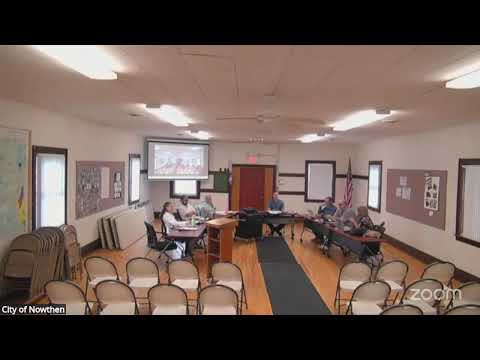
During the June 5 workshop, council members discussed a set of strategies to expand the city’s tax base and revenue streams.
Ideas included putting a local sales-tax question to the legislature and voters, establishing municipal liquor or cannabis operations, rezoning residential parcels to commercial or industrial use, and using tax-increment financing (TIF) to incentivize development. Staff cautioned that sales-tax changes require legislative and voter approvals, municipal liquor or cannabis operations carry start-up and staffing costs, and rezoning alone does not guarantee new businesses will locate in Nowthen.
Council also discussed the concept of bringing municipal water and sewer to selected parts of the city to make parcels more attractive for commercial development. Multiple council members and staff warned such infrastructure projects can be expensive, may trigger Metropolitan Council (Met Council) requirements and create broader planning implications for the whole city; one member described the water/sewer strategy as a potential "Pandora’s box" because it leads to larger decisions about growth and service-area changes.
Tax-increment financing was noted as an unused local tool that could be explored to attract investment by offering developers a long-term benefit tied to incremental property-tax revenue. Staff agreed to research options, cost estimates and statutory constraints and return information in the July budget sessions.
Next steps: staff will evaluate TIF feasibility, expected fiscal impacts of rezoning, statutory constraints on local sales-tax questions, and the engineering and Met Council implications of any sewer/water extension proposals.