Get Full Government Meeting Transcripts, Videos, & Alerts Forever!
Get email alerts on the Municipal Infrastructure topic
No spam. Unsubscribe anytime.
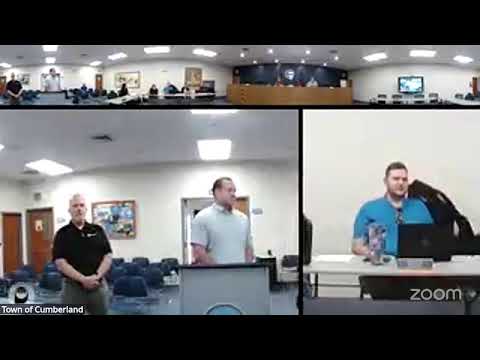
GM Development partner Dave Lawson outlines scoping plan for municipal DOT project
Summary
Dave Lawson of GM Development told a selection committee the town will begin a scoping process immediately to produce a guaranteed maximum price (GMP) for a municipal DOT project; speakers highlighted an open-book contracting model, iterative design passes, and utility/ownership questions that scoping must resolve.
Dave Lawson, a partner at GM Development, told a selection committee that the town will begin a scoping process immediately after the meeting to produce a guaranteed maximum price (GMP) and move a municipal DOT project toward construction.
The move follows a competitive selection process; a committee member said GM was chosen in part because of its experience and competitive scoring. "We've done about 300 DOTs across the state of Indiana over the last 12, 15 years," Lawson said, adding the firm has handled nearly $1 billion in work and focuses on municipal DOT projects.
Why it matters: the scoping phase will set basic parameters that determine the project's budget, the procurement track and whether savings can be reallocated to add items on a later 'wish list.' Committee members and the project team emphasized transparency and early contractor involvement as ways to reduce cost uncertainty and keep the project within the town's budget.
Lawson described a project staffing transition tied to the GMP: he said a colleague, Patrick, would be involved during scoping and that Lawson would remain as project executive after the GMP is established, attending owner-architect contract meetings and coordinating with the broader team, which he named to include Vergas and Ben.
The team described the scoping exercise as deliberately limited but sufficient to show what the town is buying: the number, depth and width of equipment bays; how many offices and restrooms; a basic site plan showing layout and paving; and an initial estimate. The presenter said the design will be refined iteratively through roughly 5%, 10% and 15% design passes to align scope with the available budget.
A central feature of the proposed procurement is an open-book approach during scoping and pricing. "Everything we do is open book and transparent," Lawson said, adding that contractors' fees and subcontractor bids would be visible to the town — information the team said is not typically available under a design-bid-build model. Committee members said that early involvement of trades and trade partners can produce better pricing and create project savings that can be applied to additional features.
The presenter said the process would be coordinated with the town's financial adviser to determine a dollar value and then 'reverse-engineer' scope to fit that budget. The committee also raised operational and utility questions: a member noted sanitary connections and stormwater work, suggested the town might administer a portion of utility work, and said streets and parks maintenance and a small storage garage could be part of the project's scope and budget considerations.
No formal vote or binding action was recorded in the transcript; the immediate next steps reported in the meeting were for staff to outline a schedule through SCOE to reach a GMP and for the scoping work to proceed under the proposed open-book, build-operate-transfer approach.