Get Full Government Meeting Transcripts, Videos, & Alerts Forever!
Get email alerts on the Oversight Finance topic
No spam. Unsubscribe anytime.
Civil grand jury report says Ione and other local agencies repeatedly missed audits, urges stronger fiscal controls
Summary
A representative of the 2025'026 Elmore County civil grand jury told the Amador County Board of Supervisors the panel found chronic audit failures, procurement and oversight weaknesses in several local governments, and recommended predictable budgeting, completed audits and procurement reform.
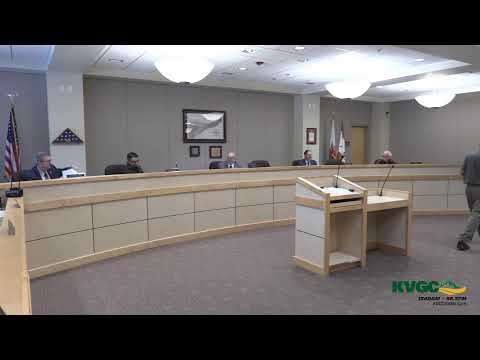
A representative of the 2025'026 Elmore County civil grand jury presented a consolidated report to the Amador County Board of Supervisors, saying the panel concluded that repeated governance and financial-control failures pose legal and operational risk to small cities in the county.
"The main thing was the chronic failure to complete required annual financial audits about 1,300 days overdue," the grand jury representative said, listing long-delayed audits, contracts executed without competitive bidding or council approval, unreliable financial documentation, and frequent turnover in key management positions as recurring problems in the City of Ione and elsewhere.
The report covered seven investigations. For Ione it cited overdue audits, an inability to borrow because of missing audited statements, repeated budget-adoption delays, violations of purchasing and bidding policies, weak internal controls, high staff turnover and rising legal costs. The grand jury said those failures "pose significant risk" including legal liability, loss of public trust and impaired services, and recommended establishing a predictable, policy‑compliant annual budget cycle; completing all outstanding audits; strengthening audit and finance committees; implementing HR reforms and centralized personnel records; enforcing purchasing and bidding policies; and considering restructuring city attorney services.
The panel also reviewed the City of Plymouth and reported the city has largely corrected earlier audit problems after changes in staff and management. The grand jury reviewed social services complaints and found no current evidence of unfair hiring or promotion bias, concluding that earlier hostile‑workplace issues had been corrected and that temporary policy‑access problems were resolved after a systems transition.
The report flagged procurement compliance problems with Amador Transit, specifically contracts for bus advertising and vehicle wraps that appeared to have been awarded without proper bidding or sole‑source justification. The grand jury recommended stricter adherence to procurement rules, procurement training for leadership, and use of a formal sole‑source approval process for advertising services.
On elections, jurors observed recent special and general election operations, praised trained staff and compliance with ADA and ballot‑handling protocols, and noted limited polling locations driven by state population thresholds.
Board members thanked the grand jury for the work; the presenter noted each entity received its copy of the report and will have 90 days to respond. The presenter also said the board had rejected 12 recommendations from the previous year's report as "unwarranted or unreasonable" and referenced statutory review under Penal Code 933.5.
No formal board action to adopt the grand jury recommendations was recorded at the meeting; the board will receive the report and the affected entities have the 90‑day response window required by law.