Get Full Government Meeting Transcripts, Videos, & Alerts Forever!
Get email alerts on the Topic Selection topic
No spam. Unsubscribe anytime.
Audit subcommittee advances eight evaluation topics; bid to add Medicaid Fraud unit fails on tie
Summary
At its May 8 meeting, the Legislative Audit Commission Evaluation Subcommittee voted to advance eight program-evaluation topics to a legislature-wide survey and rejected, on a 3–3 tie, a motion to add the Attorney General's Medicaid Fraud Control Unit to the slate. Deputy Legislative Auditor Jody Munson Rodriguez outlined timing and feasibility concerns for several topics and agreed to provide narrower scoping for large items.
The Legislative Audit Commission Evaluation Subcommittee voted May 8 to forward eight proposed program-evaluation topics to a legislature-wide survey and rejected an attempt to add the Attorney General's Medicaid Fraud Control Unit (MFCU) after a 3–3 roll-call tie.
Deputy Legislative Auditor Jody Munson Rodriguez told the subcommittee the Program Evaluation Division had pared a field of 12 candidate topics to a set of items it considered "promising" and provided colored background sheets to explain feasibility, timing and potential impact. "Our task today is to narrow down the list of potential evaluation topics from what is now 12 to between 8 and 10," Munson Rodriguez said.
The division flagged several subjects as requiring special timing or scope: Minnesota Paid Leave was described as high-impact but too new for a meaningful review until roughly late spring 2027; Department of Human Services (DHS) County Service Approvals was characterized as very large and in need of narrowing to a particular program; and the Office of Cannabis Management was noted as recently begun and possibly better considered later to allow collection of operational data.
Munson Rodriguez also explained that the commission's selection policy requires at least one board-or-committee study and at least one follow-up to a prior OLA evaluation, and she recommended the subcommittee use the survey to give legislators clearer scoping for broadly framed topics. "It is always nice to have a little bit more direction when we send surveys out," she said.
During discussion, Representative Hansen urged evaluators to measure program effectiveness as well as timeliness when considering MPCA feedlot permitting. "I would maybe just offer that we should look at, is it working? You know, is it effective rather than how fast can we get the permit out?" he said. Munson Rodriguez said the revised questions already propose looking at monitoring of environmental effects and that additional questions about attrition and water quality could be added.
Senator Rest, who moved to advance the top eight topics to the full legislature, cited both workload and duplication concerns in arguing against selecting some items. The motion to advance the eight topics passed on a voice vote.
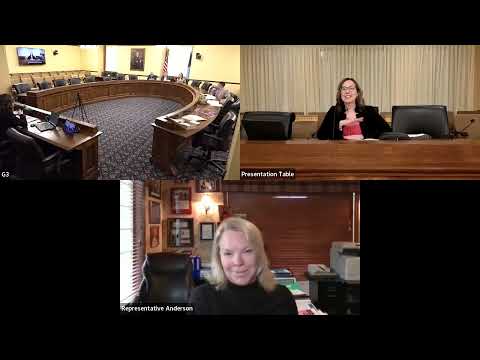
Representative Anderson then moved to add the Attorney General's Medicaid Fraud Control Unit as a ninth topic, with the understanding that OLA would build on the recent federal Office of Inspector General work rather than duplicate it. The subcommittee proceeded to a roll-call vote at the clerk's request. The roll call recorded: Senator Dibble —6 (No); Senator Drazkowski —6 (Aye); Senator Rest —6 (No); Representative Anderson —6 (Yes); Representative Lee —6 (No); Representative Quam —6 (Yes). The 3-3 tie meant the motion did not prevail.
Members asked OLA to prepare follow-up background materials. Representative Lee and Representative Quam asked the Program Evaluation Division to provide narrower scoping options or an addendum listing potential subprojects for topics such as DHS county service approvals and the statewide school-employee health-insurance idea, to help legislators know what they are ranking in the survey. Munson Rodriguez agreed to supply a revised background sheet for fall consideration and to provide links to relevant federal reports when useful.
The subcommittee also discussed the Minnesota Research (R&D) Tax Credit as a difficult follow-up because of limited data and unclear program goals; several members suggested the Legislative Budget Office or the Department of Revenue's research unit might be better placed to analyze tax-expenditure questions.
The meeting concluded with the subcommittee directing OLA to narrow scope options for several large topics and to return with a revised background paper in the fall. The subcommittee adjourned.