Get Full Government Meeting Transcripts, Videos, & Alerts Forever!
Get email alerts on the Impact Fees topic
No spam. Unsubscribe anytime.
Deltona adopts updated impact-fee ordinance after debate over two-year vs. four-year phase-in
Summary
After extensive debate and public comment on statutory limits and housing affordability, the Deltona City Commission adopted Ordinance 12-2026 to update impact fees for fire rescue, parks, transportation and law enforcement; the commission recorded a final 6-0 roll call on the motion as recorded in the meeting.
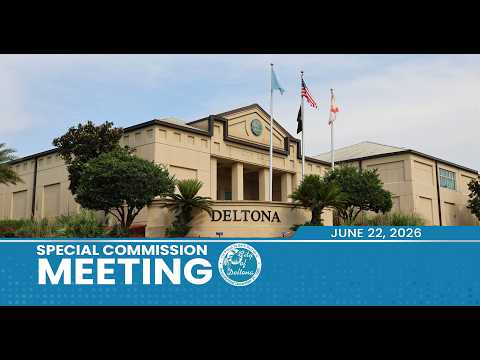
The Deltona City Commission on June 22 adopted Ordinance 12-2026, updating city impact fees for fire rescue, parks, transportation and law enforcement and creating a municipal impact fee based on a 2026 study by Raftelis. The ordinance also sets a phased implementation schedule for the new rates.
Commissioners spent more than an hour debating whether to implement the increases over two years, as proposed, or to stretch them over four years to lessen short-term effects on housing affordability. Commissioner Santiago said he opposed the two-year plan and preferred a four-year phase-in, saying, “I prefer to have it in a four phase instead of a two phase,” while citing affordability concerns and the pace of local development. By contrast, other commissioners argued the quicker implementation was justified by the consultant’s study and public-safety needs.
City Attorney (reading statute) told the commission that Florida Statute 163.31801(G) permits a jurisdiction to exceed ordinary phase-in limits only after a need-based study, at least two publicly noticed workshops and unanimous adoption for certain elements; he read the statute into the record to frame the legal constraints. The city attorney also explained that if a jurisdiction has not increased fees in the last five years it cannot accomplish the entire increase in a single installment and must use multiple installments as described in the statute.
Industry representatives urged caution. Allison Root, an officer with the Volusia Building Industry Association and a long-time Deltona resident, told commissioners she was concerned the city must make a clear record showing the extraordinary-circumstance justification and that statutory requirements be satisfied before exceeding phase-in limits. Michelle Delaney, the association’s president, read statutory language into the public record and asked the commission to verify compliance with Section 163.31801.
Staff and the consultant warned that selectively removing adjustments — for example, lowering only non-residential transportation fees while leaving other recommended changes in place — could create analytical gaps and increase legal risk. The Raftelis consultant advised against adopting parts of the study while rejecting others without a supporting analysis.
After further motions and votes, the commission ultimately approved the ordinance as presented; the meeting transcript records a final roll-call passage recorded as 6-0. The commission instructed staff to proceed with implementation steps outlined in the ordinance and to publish the revised fee tables and timelines.
The ordinance affects impact-fee schedules and the city’s fee resolution; staff said the phased schedules will be reflected in the fee exhibit and that the commission will receive follow-up materials. The record shows the city intends to implement the adopted increases beginning with the date of adoption in the schedule the commission approved.
The commission’s next formal budget and fee actions related to impact fees are scheduled in July, and the city attorney and staff said they will ensure the ordinance record contains the need-based study and workshop documentation that Florida law requires.