Get Full Government Meeting Transcripts, Videos, & Alerts Forever!
Get email alerts on the Board Of Finance Property Rule topic
No spam. Unsubscribe anytime.
Legal memo puts New Canaan commission on alert over Board of Finance property-ownership rule
Summary
Legal counsel told the Charter Revision Commission that requiring Board of Finance members to be real-estate taxpayers may raise federal constitutional concerns; commissioners weighed voter precedent and litigation risk but made no final change, debating whether to place the issue on the ballot.
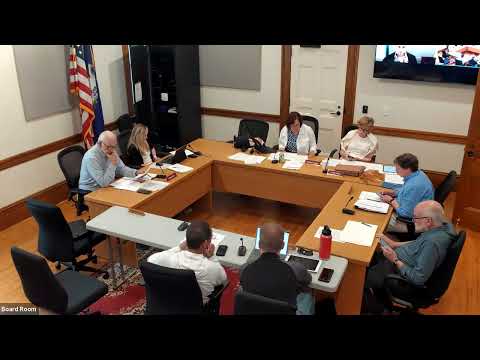
The New Canaan Charter Revision Commission spent a substantial portion of its June 18 meeting debating whether to retain a charter requirement that members of the Board of Finance be real-estate taxpayers after receiving a legal memo that flagged constitutional concerns.
Legal advisor Nick Bamonte told commissioners that while Connecticut statutes permit property-ownership qualifications and several towns have similar provisions, federal constitutional challenges elsewhere (including a cited U.S. Supreme Court case) have found such qualifications vulnerable. ‘‘Just because something is authorized by statute doesn't mean that it's insulated against a broader federal constitutional challenge,’’ Bamonte said, urging the commission to weigh precedent against litigation risk.
Commissioners recounted past voter sentiment — including a previous referendum where voters affirmed the requirement — and noted that the charter provision has existed for decades. Some members urged retaining the requirement, citing local voter history and continuity; others described the requirement as potentially discriminatory and warned that being an outlier could increase litigation risk. ‘‘I think it is something that should be looked at,’’ one commissioner said, adding concern that a younger, non–property-owning resident could be excluded from service.
Options discussed included leaving the charter unchanged, placing a single ballot question to remove the property-ownership requirement, or folding it into the commission’s broader catch-all item. Commissioners also discussed whether a change should be effected administratively (through ordinance reconciliation) rather than presented as a stand-alone charter ballot item.
No final decision was recorded at the meeting. Commissioners asked staff and legal counsel for further clarification and agreed to add the matter to upcoming agendas so they can decide whether to treat the change as a separate ballot question before the July deadlines.