Get Full Government Meeting Transcripts, Videos, & Alerts Forever!
Get email alerts on the Sustainability Plan topic
No spam. Unsubscribe anytime.
Norwalk sustainability director sets May deadline, urges pay‑as‑you‑throw and resilience hubs
Summary
At its second meeting, Norwalk’s sustainability director, Jody Trendler, reviewed an accelerated timeline to finish an updated sustainability and resilience plan by the end of May, emphasized greenhouse‑gas metrics, and proposed evaluating pay‑as‑you‑throw waste pricing and resilience hubs powered by microgrids.
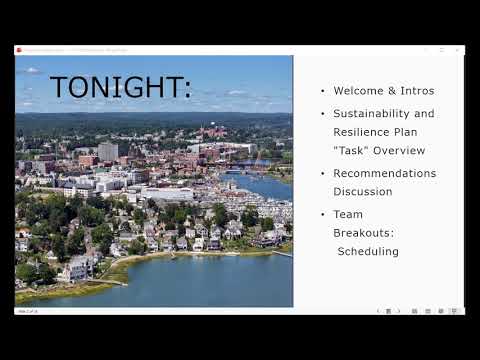
Norwalk’s sustainability director, Jody Trendler, told members of the city’s Sustainability Task Force that the group will aim to finish recommendations for an updated sustainability and resilience plan by the end of May, shortening an earlier 18‑month target.
“The goal is to have this done by the end of May,” Trendler said, explaining that the compressed schedule will require commitment from nine sector teams working between monthly full meetings. Trendler identified greenhouse‑gas emissions as the primary metric the task force will use to compare and prioritize actions across sectors.
Why it matters: Trendler said most of the city’s emissions come from vehicles, homes and business energy use, so the task force will focus on measures that reduce vehicle miles traveled, improve building performance, and expand clean energy. She described the plan as a “living document” intended to align local targets with state and regional objectives and to centralize existing reports and data for coordinated action.
On waste and recycling, Trendler highlighted a practical example the teams will analyze: pay‑as‑you‑throw programs. “If you go out and do the research, you can find that there’s potential for increasing recycling rates up to 11% by implementing pay‑as‑you‑throw,” she said, and recommended compiling case studies to estimate both emissions and behavioral impacts.
Trendler also discussed resilience measures linked to energy: “If we work to build resilience hubs that are powered by microgrids, so that we can actually generate some power within our municipal boundaries, that will help make us more resilient,” she said, noting such hubs would provide power during storm outages.
Questions from task force members highlighted political backing, outreach and funding. Tanner asked whether the new mayor supported the effort; Trendler said she had a brief meeting and a longer meeting scheduled soon. Gary pressed why the timeline was shortened; Trendler said the shift reflected uncertainty about her continued tenure and availability, which contributed to the accelerated schedule.
Members emphasized community engagement and practical tools: Nisha asked about increasing public sign‑ups and communications; Trendler said the sustainability office web page includes a sign‑up and that she has started a shared Google Drive folder for materials. Tanner suggested a group communication channel for asynchronous collaboration; Trendler said she will add members’ emails to the Drive and encouraged organizations to share information.
What remains to do: Trendler noted several data‑collection challenges — multiple electric utilities, different trash haulers and water providers — that complicate updating the 2023 greenhouse‑gas inventory. Teams will be responsible for assembling existing data, identifying gaps, estimating emissions impacts of candidate actions and flagging costs and feasibility to prioritize recommendations.
No formal votes or motions were taken at the meeting. Trendler said she will email materials and the Drive link after the call and follow up on scheduling team meetings.
Next steps: The task force will meet monthly as a full body and convene nine sector teams between sessions to draft sector write‑ups, set metrics and produce recommendations for the end‑of‑May submission.