Get Full Government Meeting Transcripts, Videos, & Alerts Forever!
Get email alerts on the Economic Development topic
No spam. Unsubscribe anytime.
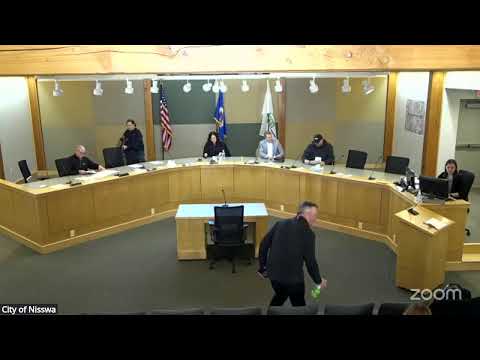
Nisswa City Council workshop considers reestablishing economic development authority
Summary
At a Jan. 20 workshop, the Nisswa City Council heard from Tyler Glenn of the Briner Lakes Area Economic Development Corporation about steps to reestablish an Economic Development Authority, its powers and board makeup; councilors raised questions about transparency, taxing authority and use of tools such as TIF.
Tyler Glenn, executive director of the Briner Lakes Area Economic Development Corporation and a contracted economic development provider for Nisswa City, told the council at a Jan. 20 workshop that the city’s Economic Development Authority (EDA) appears to have been disbanded around 2017 and outlined steps to reestablish it.
Glenn said reestablishing an EDA would begin with a council‑directed resolution drafted by the city attorney and a subsequent public meeting before the authority could be created. "Once the resolution has been drafted to establish the EDA… it gives you tax levying authority. It gives you the ability to own property," he said, describing the range of statutory powers an EDA can receive.
Why it matters: an EDA can formalize and accelerate work on city‑owned sites, grant the body specific powers to manage or convey property, and create a formal vehicle for pursuing development projects and grant‑funded planning. Glenn told the council he has applied for and received an Initiative Foundation grant to develop a master plan for city‑owned land south of Highway 77 and west of 371, which he said could become an early focus for the authority.
Councilors asked detailed questions about board size, residency requirements, oversight and how an EDA would relate to the city’s comprehensive plan. "The minimum is three," Glenn said, noting statute requires two sitting council members on an EDA board; he recommended five members for broader community representation while cautioning against a very large board. On eligibility he said community members must be city citizens or established local business owners.
City Attorney Pearson raised concerns about potential downstream effects, including whether forming an EDA would lead to more requests for incentives such as tax increment financing (TIF). "Is the formation of an EDA… likely to blossom into more of that kind of thing? That's a concern I have," he said. Glenn replied that forming an EDA does not inherently drive TIF use, though an EDA can have taxing authority and communities decide their appetite for incentives.
Council members and staff addressed transparency concerns raised by residents, saying an EDA’s governing documents and membership can preserve council oversight. Glenn emphasized that any sale of city‑owned land would still require council approval even if the land were managed by an EDA.
No formal motion to create an EDA was made during the workshop. Council members discussed next steps, including having the city attorney draft a resolution and holding a public hearing; Glenn said he would continue working on current development opportunities in the meantime. The workshop closed with a motion to adjourn, which was seconded and approved by voice vote.
What’s next: the council would need to direct the city attorney at a formal council meeting to draft a resolution to establish an EDA and then hold the required public hearing before taking any final action.