Get Full Government Meeting Transcripts, Videos, & Alerts Forever!
Get email alerts on the Infrastructure Finance topic
No spam. Unsubscribe anytime.
Richmond panel weighs steep rate impacts and trade‑offs in funding options for wastewater upgrade
Summary
Consultants presented seven repayment scenarios for a proposed wastewater treatment upgrade, showing wide swings: a worst‑case 20‑year SRF loan could nearly double average residential sewer bills within five years, while a model combining increased septage receipts and a longer term loan would lower near‑term increases. Commissioners debated septage markets, taxpayer contributions and 20‑ vs 30‑year loan tradeoffs.
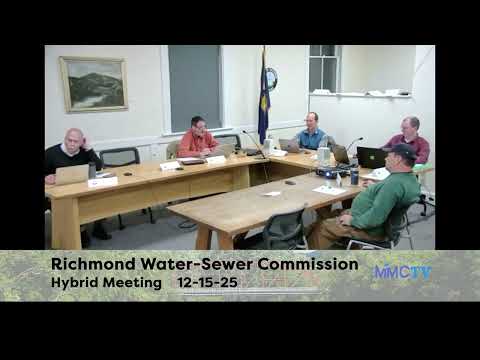
Consultants presented a sensitivity model Dec. 15 that examined seven financing scenarios for Richmond’s proposed wastewater treatment upgrade, showing how assumptions about septage receipts, loan term, taxpayer sharing and alternative lenders change the burden on ratepayers.
Aiden, the consultant, said the tool lets the town vary blue‑cell inputs such as annual sewer rate increases, projected development growth and septage volume to see how each choice affects annual loan payments and reserve balances. “Out of the ones that we presented, this is sort of the best‑case scenario,” Aiden said, referring to a package that assumes higher septage revenues and a 30‑year loan term.
The modeled outcomes were stark. The consultant reported that a worst‑case scenario — limited new septage, limited development and a 20‑year Clean Water State Revolving Fund (CWSRF) loan — would increase the average residential sewer bill about 159% within five years. A scenario that assumed the upgraded plant could capture substantially more septage and used a prolonged loan term reduced the projected five‑year increase to roughly 34%.
Commissioners pressed on the feasibility of growing septage receipts. Mark asked about the market for additional septage and whether the town can realistically increase intake from around 20,000 gallons per day toward the higher volumes used in the model. Steve, the superintendent, said the plant’s processing capability can be expanded with the upgrades and that operational steps such as 24‑hour receiving and automated key‑card unloading could attract haulers, but he cautioned that hauling through residential streets and night operations may spark community pushback.
The commission also explored spreading some repayment across the municipal tax base. The consultant ran a 20% taxpayer burden‑share example, where that share of annual debt service would be paid from the town’s property tax base rather than entirely by sewer ratepayers. That scenario lowered the direct ratepayer increase substantially while producing an estimated municipal contribution of roughly $178,000 per year once both construction contracts are in service — a figure several commissioners said would require select board review and public discussion.
On loan term, some commissioners preferred shorter loans that better match asset life. Erin said she was uncomfortable matching a 30‑year loan to assets she expects to last about 20 years. Other members observed that a 30‑year amortization can reduce near‑term shocks for ratepayers and allow time to build reserves, but it also extends debt service far into the future.
The consultant flagged a financing tool called Whisper (Water Infrastructure Sponsorship Program) that can reduce net loan costs if the town identifies a qualifying natural‑resource sponsorship project at the time it signs construction bonds. Katherine King from the program described Whisper’s mechanism: a municipality can sponsor a restoration project for up to 10% of the base construction loan and receive a net interest‑rate reduction (including a 0.1% additional reduction), which can lower lifetime debt burdens.
No formal vote was taken on any financing path. Commissioners asked staff to continue vetting options, to return with more detail on realistic septage volumes and operational changes needed to capture them, and to bring specific draft proposals for any taxpayer contribution or local option tax for further public review.
Next steps: staff will follow up with the state on pending design contract review, provide more granular septage‑revenue sensitivity runs, and prepare a straw‑man revenue allocation for future public discussion.