Get Full Government Meeting Transcripts, Videos, & Alerts Forever!
Get email alerts on the Tax Expenditures topic
No spam. Unsubscribe anytime.
Tax commission directs LBO to evaluate five tax expenditures, adopts objectives 7-0
Summary
The Tax Expenditure Review Commission voted 7-0, with two members excused, on Sept. 18, 2024 to adopt objective statements and direct the Legislative Budget Office to evaluate five tax expenditures including the powerline credit and mortgage‑registry exemptions; the LBO will add requested data and technical footnotes.
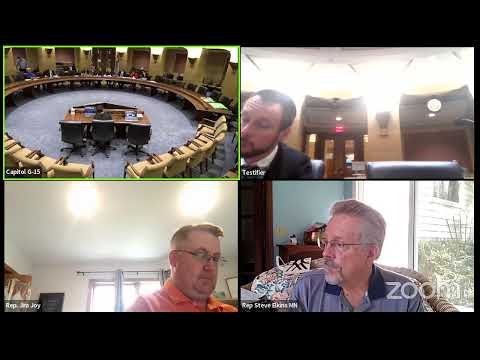
ST. PAUL, Minn. — The Tax Expenditure Review Commission on Sept. 18, 2024 unanimously approved proposed objective statements and directed the Legislative Budget Office to complete evaluations of five tax expenditures, voting 7–0 with two members excused.
The motion, adopted without amendments, covers the powerline property tax credit; an agricultural loan exemption from the mortgage‑registry tax; a government housing mortgage‑registry exemption; a motor‑vehicle sales‑tax exemption for bookmobiles; and a motor‑vehicle sales‑tax exemption for ready‑mix concrete trucks. The commission asked the LBO to add technical footnotes and additional data requested by members before completing the full evaluation reports.
Joel Enders of the Legislative Budget Office opened the presentations by describing the powerline property tax credit. "The median credit amount for taxes payable in 2024 was $832 and 4,100 parcels received the Power Line Credit in tax year 2021," Enders said, and explained that the credit is funded from a set‑aside of local property taxes and allocated based on the length of qualifying transmission line crossing a parcel.
Members asked whether qualifying transmission lines are included in the state‑assessed valuation. "This is not my area of expertise but my recollection is that the high voltage lines are part of the state assessed valuation," Eric Wette of the Minnesota Department of Revenue said, and he told the commission the department would confirm details in writing so the LBO could add a technical footnote.
Thomas Rainey of the LBO summarized the agricultural mortgage‑registry exemption, enacted in 2001, and cited a latest projected fiscal impact of $1.7 million. Rainey said the exemption applies when proceeds finance acquisition or improvement of property classified as agricultural and noted it does not apply to a residential house or garage on a qualifying parcel.
Annie Lemieux of the LBO presented the government housing mortgage‑registry exemption (Minn. Stat. 287.4, subd. 6), which the office estimated at about $2.9 million per year. Members requested that the final evaluation include a breakdown of which government entities issue qualifying loans (federal, state or local) and how the exemption is used to incentivize private developers; Lemieux said that data is not currently in the staff write‑up but can be added to the full report.
LBO staff also reviewed smaller exemptions: the bookmobile motor‑vehicle sales‑tax exemption (enacted 1994) with a fiscal impact under $50,000 in recent reporting, and a ready‑mix concrete truck exemption (enacted 1998) with an estimated impact near $1.4 million. Commissioners suggested the bookmobile review consider modern service uses (for example, digital access or hotspots) and discussed whether moving vehicles legitimately qualify as capital equipment for sales‑tax exemption purposes.
A commission member moved to adopt the LBO's proposed objective statements for the five items and to direct the LBO to proceed with evaluations and make technical corrections as appropriate. The clerk recorded seven yes votes and two excused; the motion carried. The commission indicated it expects to meet again in early December to review the LBO's 2024 tax‑expenditure report.
Next steps: the LBO will complete the requested evaluations and insert the additional data and footnotes the commission requested; the commission scheduled a follow‑up meeting to review and consider adoption of the staff reports.
(Reporting by the Tax Expenditure Review Commission meeting record.)